thenumerateninny.com
Natterings of a Woman in STEM
Twelve of One; A Dozen of the Other

If your lover sent you eleven roses, how would you feel? If your package of baked goods contained only ten buns, would it seem right? Not at all! You would feel undervalued, shortchanged, or cheated.
We pretend that numbers are logical devices, free of emotional resonance, but that’s a false premise. Twelve is a number with a special significance; one to which we attach a totally irrational value.
Why is twelve so special to us?
Twelve measures the rhythm of human life. Our ancestors, who were better connected to nature than us, were deeply aware of the twelve lunar cycles in a year. Early calendars and modern religious calendars are intimately connected to the cycles of the moon. Twelve new moons bathe our world in silver light from one winter solstice to the next. In our artificially lit world, we sometimes forget how significant that is.
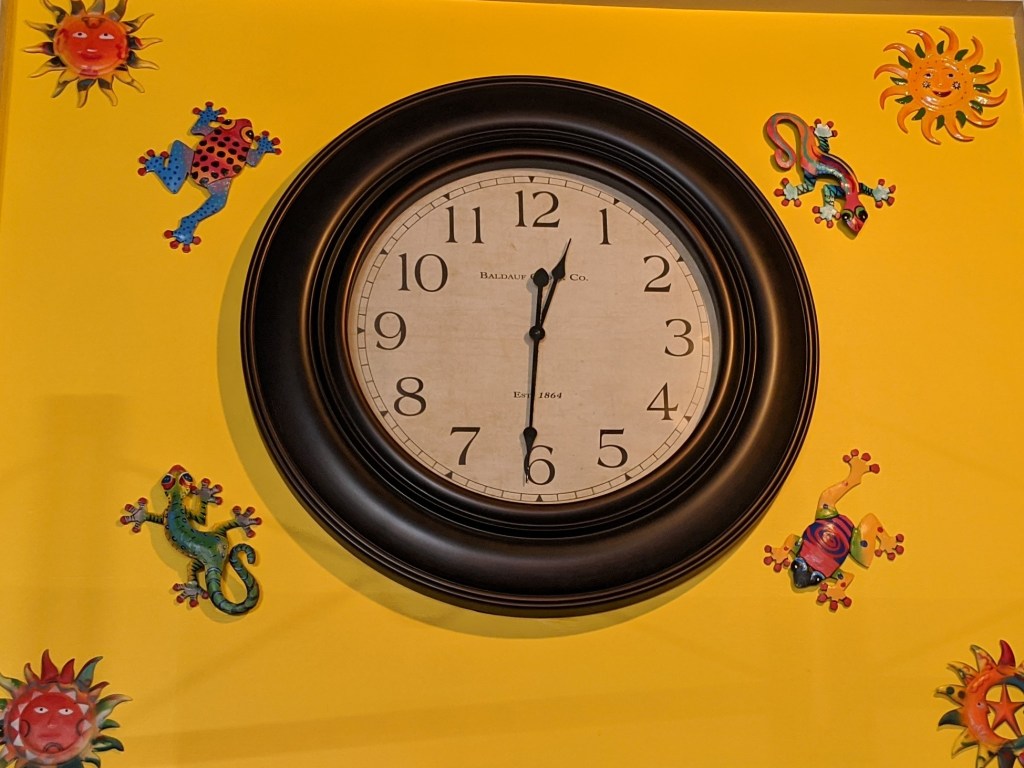
Despite decimalization and digitization, we still split our day into two twelve-hour blocks. Twelve o’clock represents both the zenith of the sun and the nadir of the night. Twelve is a factor of sixty, the basis for the sexagesimal system, first used some twenty-four centuries ago, and surviving today in our computation of seconds and minutes.
There is there nothing as primal as the process of preparing food, and nothing as intimate as consuming it. So, it is no surprise that twelve injects itself into nutrition. Baking sheets are sized for a dozen biscuits. Recipes produce a dozen rolls of bread. We expect there to be a dozen eggs in the carton we buy. Police buy a dozen doughnuts at a time. (So we’re told.) Canned drinks come in packages of a dozen. Food, the essential support of life, is duodecimal.


Is our attachment to the number twelve more cultural than natural? If so, it may explain why its very name is noteworthy. In the English language, and other Germanic-influenced languages, twelve is the largest number that has a single syllable – douze, twaalf, zwölf, tolv. But if culture attaches us to the concept of a dozen, religion – which underpins so many traditions – has bonded us to it. Consider the twelve apostles of Christ, the twelve tribes of Israel, twelve petals in Anahata, and the patriarchs of almost every faith having twelve sons. (Sadly, these gentlemen never seemed to have any daughters. We will pity them.)
Twelve’s connection to the sacred is mirrored in its connection to the profane. When accused of a crime, twelve of our peers must judge us. A dozen pennies once defined a shilling. (Oh, filthy lucre!) There are twelve inches in a foot. Economies of scale are referred to as being ‘cheaper by the dozen’. And the route back from alcoholism includes twelve steps.
However, despite the cultural connotations of the number, it’s our bodies that prove the connection to twelve is predominantly organic. Medicine defines twelve body systems. We have twelve cranial nerves. Healthy people have twelve pairs of ribs. We can point to each finger bone in our hand with our thumb and count to twelve.
These dainty bones show us that four and three are factors of twelve. We force the created world to imitate our hands. The ratio of four by three appears in furniture design, photo sizing, and so many other things humans choose to make. In design, the ratio 4:3 is an instinctive organization of space and is pleasing to the human eye.
The numbers eleven and thirteen are discordant in a way the number twelve is not. We are discommoded by eleven roses. We never gamble on number thirteen. But twelve is comfortable, trustworthy, and reliable. The modern world may operate in base ten, but the dozen (base twelve) is a unit we refuse to abandon. There is no objective reason why twelve is so weighty, yet it is. Our rational intellects may think it is an innocuous number, but our emotional minds know otherwise.
Follow The Numerate Ninny on Facebook, Instagram, Twitter, LinkedIn or at: https://thenumerateninny.com/
Find my books on all Amazon platforms.

 thenumerateninny.com