thenumerateninny.com
Natterings of a Woman in STEM
Halloween is happening – despite rumors to the contrary
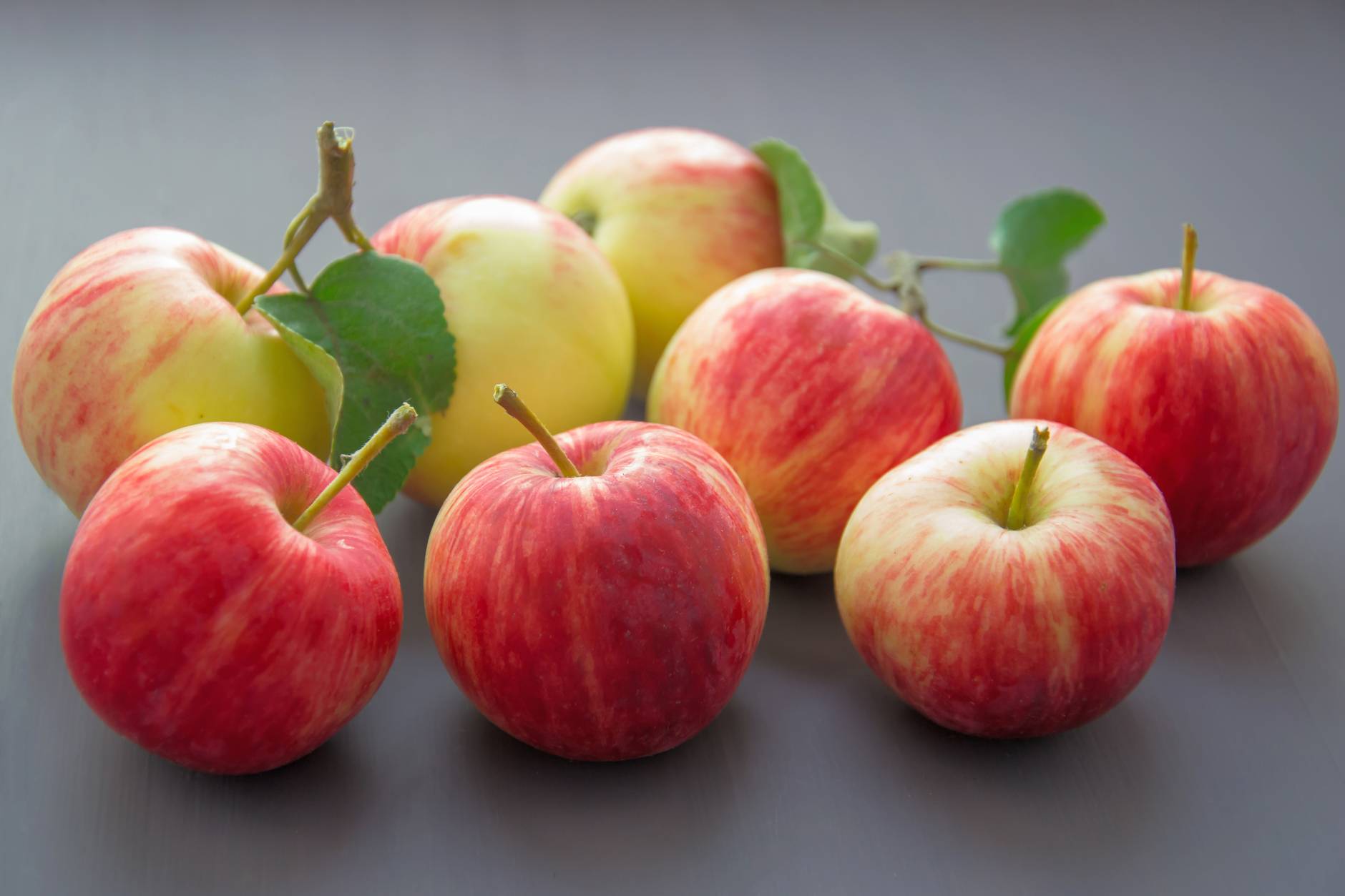
There is no need to lament the limitations on trick-or-treating in 2020. There are plenty of Halloween traditions to indulge in. Here are some ideas for Oíche Samhain:
Bobbing for stuff: Bobbing for apples is a classic Halloween activity. Make it more challenging by bobbing for something that does not float. Place a nut (e.g. a walnut in a shell) in the bottom of the basin and dunk for it. Have towels nearby.
Eating an apple without using your hands: Suspend the apple by a string from a door frame or other support, hold your hands behind your back (no cheating), and see how you get along. You might be delighted to win this challenge. But remember, only people with big mouths win.
Don’t start a bonfire: The most ancient Halloween activity is setting bonfires. Do not adopt this tradition! The Irish fire service lives in horror of Halloween, the busiest night of the year. Even though I’m a fire protection engineer, I reluctantly support this tradition simply because it is as old as the Celtic presence in Ireland. Who am I to challenge thousands of years of history? However, not all traditions should be exported – and this is clearly one of them.

Fortunetelling: Drop an egg in water and divine the future from the shape. You don’t know how to interpret shapes? So what? Neither do I. Have a Baileys and let your imagination run wild.
Eat some barmbrack (recipe below): More fortunetelling! If you find an item in your slice of brack, it predicts your future. A coin in the brack means wealth. A piece of cloth predicts poverty. A thimble foretells of spinsterhood/bachelorhood. A ring predicts marriage in the near future. (If a child finds the ring, it should be placed under the pillow to elicit dreams of a future spouse.)
By the way, this form of prediction is totally useless. I did not grow up to marry a skinny, dark-haired man, and I am still working for a living.
Guising: Remember that Oíche Samhain is the night when the barrier between this world and the next is at its thinnest. In other words, your late great uncle Sean may return to castigate you for letting his goldfish die. Prevent this by disguising yourself suitably. In fact, if you can convince someone in the household to dress in your clothing, that person might suffer Sean’s ghostly attentions in your stead. (This is a tip from an evil mother.)
Barmbrack:
The recipe below is a modified version of one found in The Irish Heritage Cookbook by Margaret Johnson (available on Amazon). And yes, there is a reason I use an American recipe for Irish food.
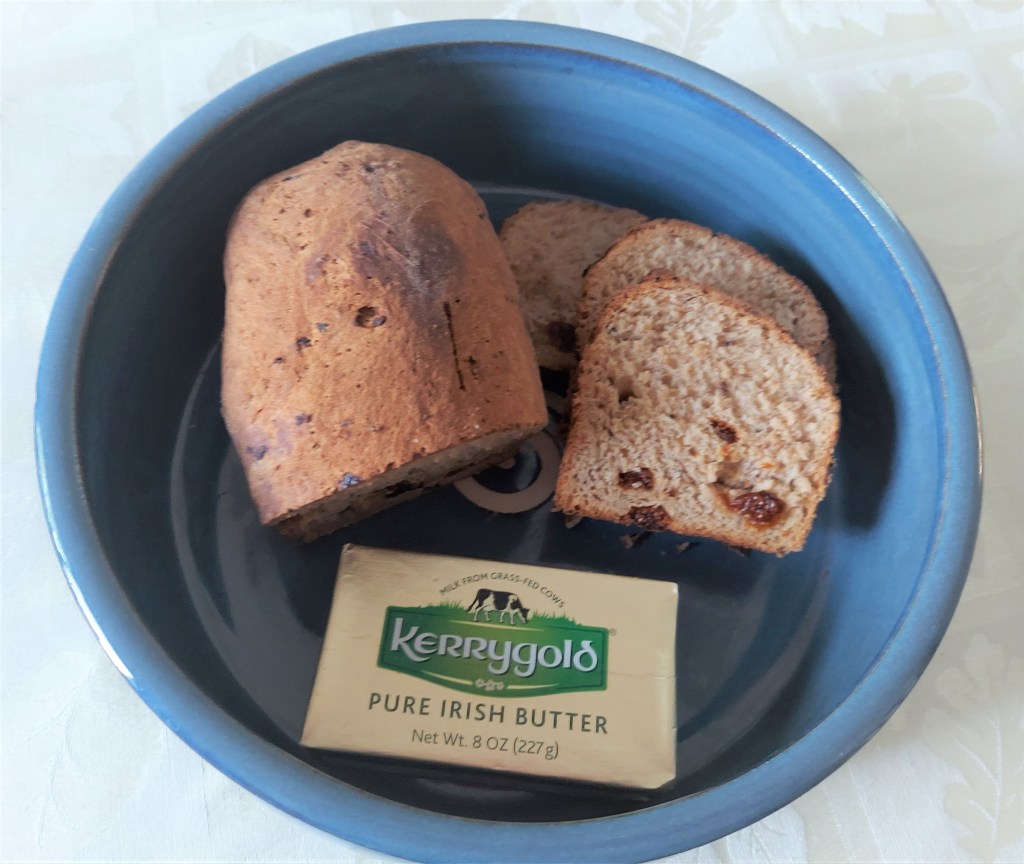
When I first arrived in the US – where the quality of bread is dubious – I tried to replicate Irish bread at home. These attempts failed miserably. However, one day, I had to visit a flour mill for work, and discovered the plant manager was a qualified miller with international experience. He was, therefore, very well versed in the quality of wheat grown different regions of the world. He explained that the levels of gluten in Irish and US flours are so different that recipes do not travel well between these countries. So, if my American friends wish to emulate Irish baking, it is best to use a recipe developed in the US by someone who has figured out the necessary adjustments on your behalf.
(By the by, the plant manager and I also talked about combustible dust hazards. So, I didn’t totally cadge off work. Though, he sent me away with an enormous sack of flour, evidence of our distracted discussions.)
If you are determined to use a recipe of Irish origin in the US, try using cake flour, which has a lower level of gluten than most American flours. It may also be useful to increase the amount of leavening agent in the mixture.
When it comes to baking barmbrack, place the rag, coin, thimble and ring in the brack before you knead it. I like to wrap the items in wax paper for hygiene reasons. Also, when my children were small, I omitted the rag and upped the number of coins in the mix because small children take these predictions too much to heart.
Recipe:
- 4 cups of all-purpose flour
- 1/2 teaspoon of ground cinnamon
- 1/2 teaspoon mixed spice
- 1/4 teaspoon of ground nutmeg
- Smidgen of salt
- 4 tablespoons of cold butter
- 1 package (2 teaspoons) of active dried yeast
- 1/2 cup superfine sugar
- 1 1/4 cup milk
- 1 egg beaten (how cruel)
- 1 cup sultanas/golden raisins
- 1/2 cup raisins/dried currants
- 1/4 cup mixed candied peel
- 1 egg yolk beaten with 2 tablespoons water
Sift the flour cinnamon, mixed spice, nutmeg and salt together in a medium bowl. With a pastry blender, knives, or your fingers, cut or work the butter into the flour until it resembles course crumbs. In a medium bowl, combine the yeast with 1 teaspoon of the sugar. In a small saucepan, warm the milk until bubbles form around the edges of the pan, then add 1 teaspoon to the yeast mixture.
Pour the remaining milk and the egg into the yeast mixture. Combine with the dry ingredients and add the remaining sugar. Blend well with a wooden spoon or knead with your hands in the bowl until the dough is stiff.
Fold in the raisins, currants, and mixed peel. Cover the bowl with a damp cloth or plastic wrap ad let sit in a warm place until doubled in size, about 1 hour. On a lightly floured board, knead 2 to 3 minutes. Divide the dough in half and form into 2 balls. Place each in a greased 9-by-5 inch loaf pan and let rise in a warm place for 30 minutes.
Preheat the oven to 350⁰F. Brush the top of the loaves with the egg yolk mixture to glaze. Bake until the bread is golden and a skewer inserted into the center comes out clean, about 1 hour. Turn onto wire racks and let cool completely before cutting.
Numerate Ninny Notes on the Recipe:
Firstly, I never let the barmbrack cool completely before eating it. What an insane suggestion! Secondly, based on a recent decision by the Supreme Court of Ireland, barmbrack is too sweet to meet the legal definition of bread, so let’s just call it a brack.
For convenience, I have adapted the recipe for use in my bread machine. I place all the wet ingredients in the machine first (not all manufacturers recommend this) and run the machine on the dough cycle. I then take the dough out, introduce the fortune telling elements, knead and split the dough, and put it in pans to rise for another half hour before baking. With this method, I find that conventional granular sugar works well enough, which saves a trip to the supermarket. However, this approach causes the fruit to disintegrate and be less visible in the finished brack. Whether this is a good or bad thing, is a matter of opinion.
Another adaption I have made to the recipe is to use less fruit than recommended. Candied/glacé peel is hard to find where I live, so I either replace it with other fruits or simply omit it. For the fruit, I often soak it in cold tea for an hour or two before using it in the recipe.
Follow The Numerate Ninny on Facebook, Instagram, Twitter, LinkedIn or at: https://thenumerateninny.com/
Find my books on all Amazon Platforms.
 thenumerateninny.com