thenumerateninny.com
Natterings of a Woman in STEM
Hobbies are Work!
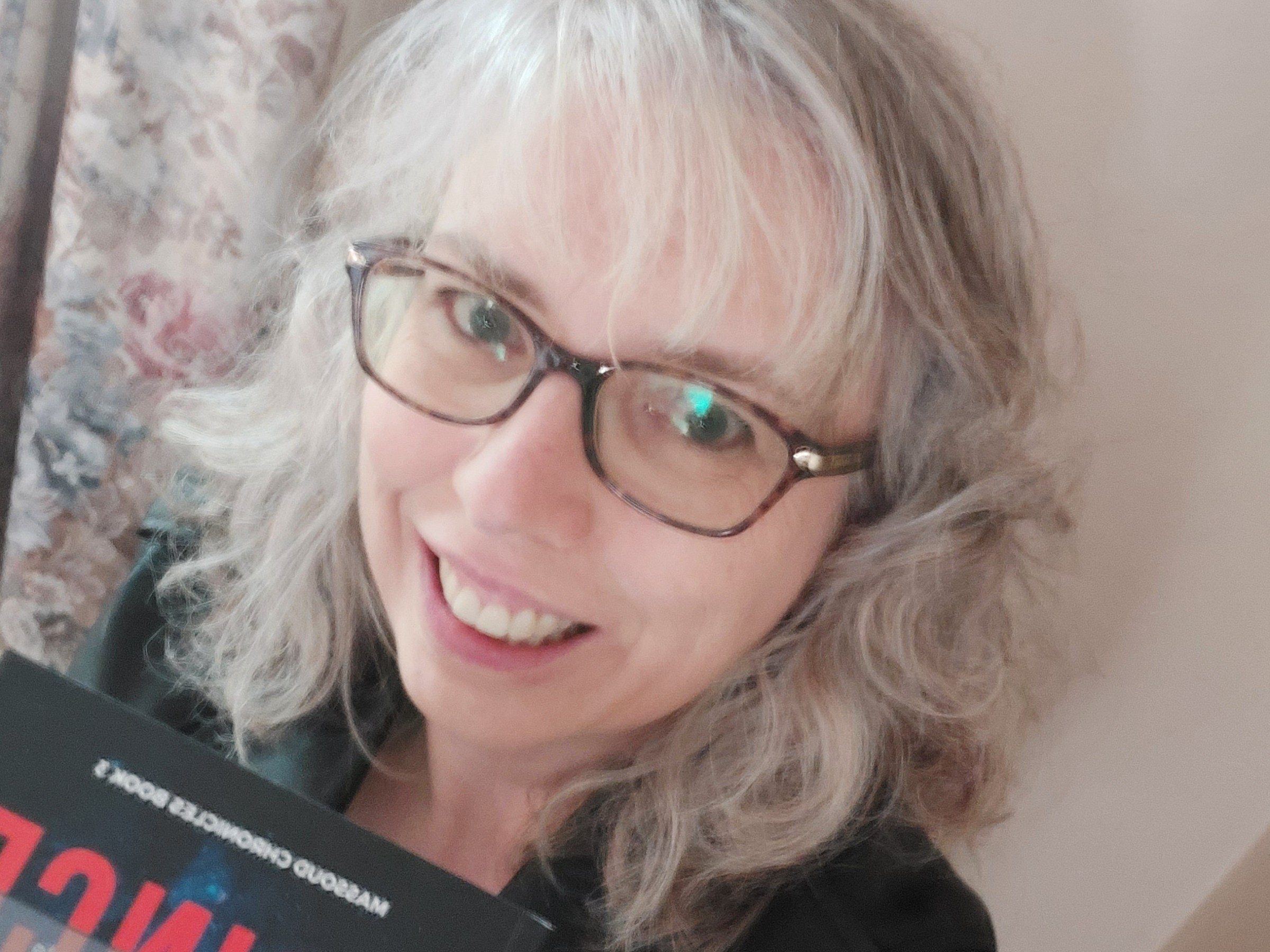
Yikes! The physical draft of my next book is here, and now I have to proofread it!
That’s the problem with self-publishing. Proofing your own writing is a hard work. But I labor on womanfully. In fact, I have already covered the draft with orange marks. (The first writing implement to come to hand was one of the boys’ old coloring pencils.)
I had already tried the following approaches to proofreading, but it is amazing how many problems come to light when you change to a totally different medium – in this case a printed book.
- Changing the font and size. This changes the text wrap and breaks up the writer’s visual memory of the words.
- Asking others to read it. This is not a perfect approach. For example, the hubby is great at spotting missing words but is totally blind to plot holes.
- Using a grammar and style aid. I have been using ProWritingAid, and it helped spot a myriad of problems.
And still there are more errors to find!
If I get everything done, ‘Prince’ will be published on April Fool’s Day. I couldn’t think of a better day to do it. In the meantime, the book is on preorder. The amazon.com link is below.
And the amazon.co.uk link follows:

Follow me at: thenumerateninny.com or on FaceBook, LinkedIn, or Twitter.
Not his mother’s education…
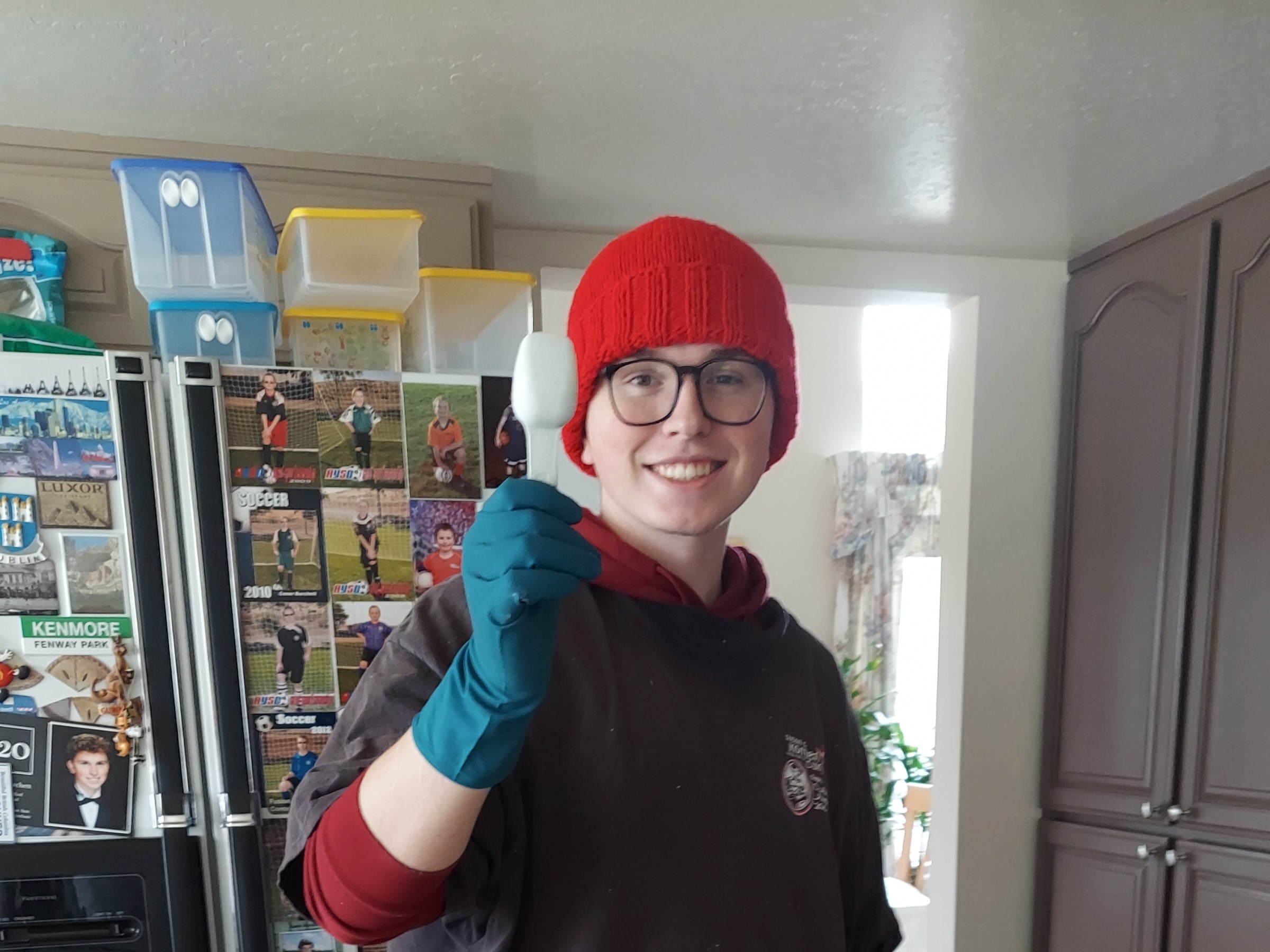
College chemistry in pandemic times!
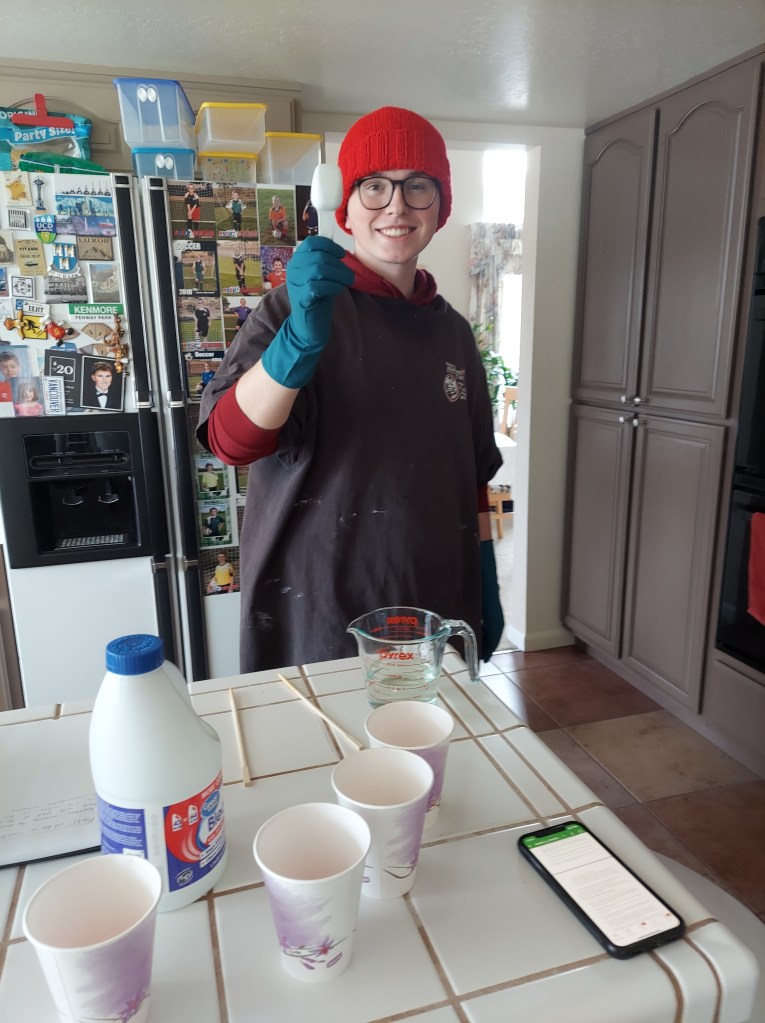
Our student of engineering re-purposes the kitchen for one of his few labs.
No white lab coat for him; his dad’s old black t-shirt will do the trick. Paper cups have replaced flasks, and chopsticks work as stirrers. His gloves were fetched from the garage. And perhaps his safety glasses (not shown) were once used in boyhood nerf wars.
This is what the first year of attending Zoom University looks like.
All this stands in contrast with mother’s first year at university. She had a nominal fifteen hours of scheduled labs, workshop training, and technical drawing classes per weeks.
There has been much discussion about children losing out on their education during the pandemic, but even self-motivated adult learners are at a disadvantage. This is especially true for students in fields where practical training goes hand in hand with theoretical studies.
Over the next few years, engineering graduates will be less prepared for the workplace than their slightly older friends. However, they will not be any less intelligent or less able. It will be up to us, who are established in the profession, to give them extra support.

Follow me at http://thenumerateninny.com or on FaceBook, LinkedIn, or Twitter.
Review a book! (Get a freebie!)

Would you like to be part of the advance review team for my latest book, Prince?
If so, just follow the link below to obtain a draft copy. Provide feedback and be part of the process!
https://booksprout.co/arc/59473/prince
What do you get?
- Free access to the next volume in the Massoud Chronicles. Admittedly, it will be in a draft form, but…
- A chance to point out my errors and at my invitation. I must be mad! (Sound of unhinged cackling.) Use the ‘contact author’ option.
- The opportunity to be an early reviewer. Use the ‘leave a review’ option.
- My everlasting gratitude.
Although the book is the third in a series, it is readable as a standalone novel.
Publishing date is April 1st, so don’t dally!
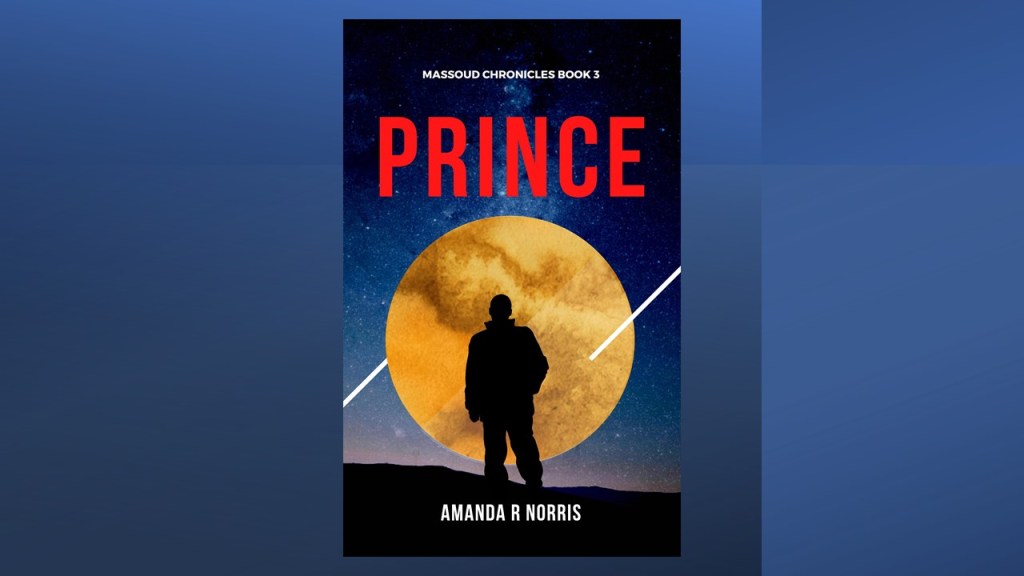
P.S. I’ve already made changes since the upload. Editing is a moving target, but all suggestions are welcome.
Follow The Numerate Ninny on Facebook, Instagram, Twitter, LinkedIn or at: https://thenumerateninny.com/
Cover Conundrum
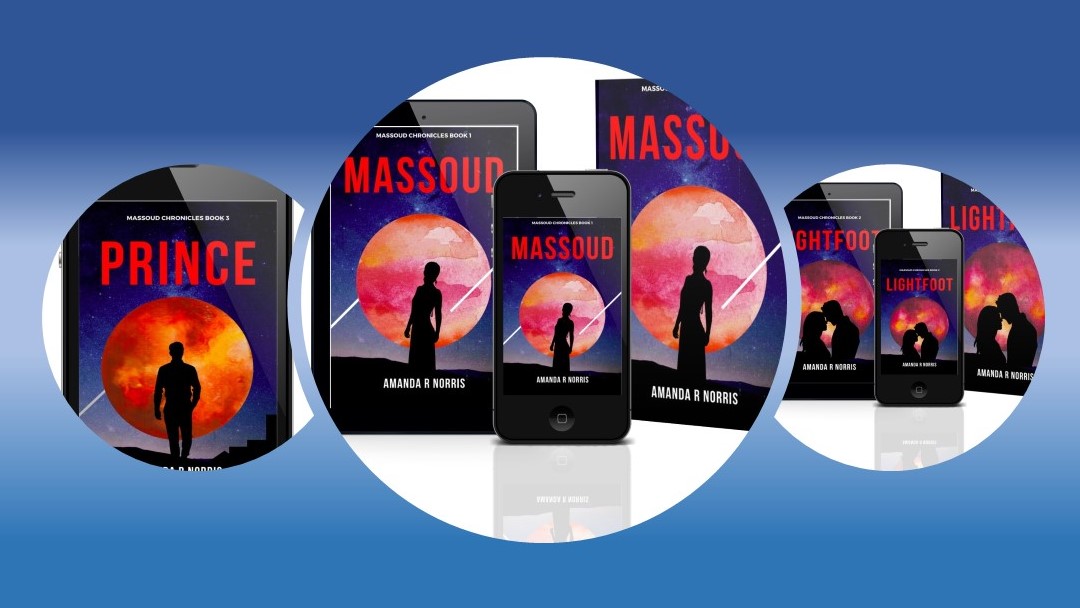
Indie authors who ignore warnings about the importance of book covers do so at their peril. But, not every writer has an artistic eye, and those few who do, do not necessarily understand what makes a book sell.
Having a myopic eye for art, I definitely rely on the skills of others when it comes to designing promotional materials. However, I have also been listening to what successful indie authors say about the topic. They believe in trying a variety of book covers to determine which one drives click-through rates (an essential metric in advertising campaigns).
As a result of my research, a few key points burrowed their way into my obtuse brain:
- The design should be consistent with other books in the genre.
- The type font should also be consistent with the readers’ expectations for the genre.
- The font color is key – brighter often being better.
- Generally, human figures should be central in the image.
- The background should draw the eye to the center of the image or to the human figure.
- The design should remain intelligible, even when viewed as a thumbnail.
- For book series, all book covers should have a consistent design theme and consistency in color.
- Only clever people can successfully ignore these suggestions.
With these points in mind, I am considering changing my book covers (see below). The original covers were professionally designed, but I prepared the newest set with the aid of a website. Let me know whether you prefer the existing or the proposed book covers, or if you have any other thoughts for improvement.
First, have a look at the original book covers, which were professionally prepared by customebookcovers.com.
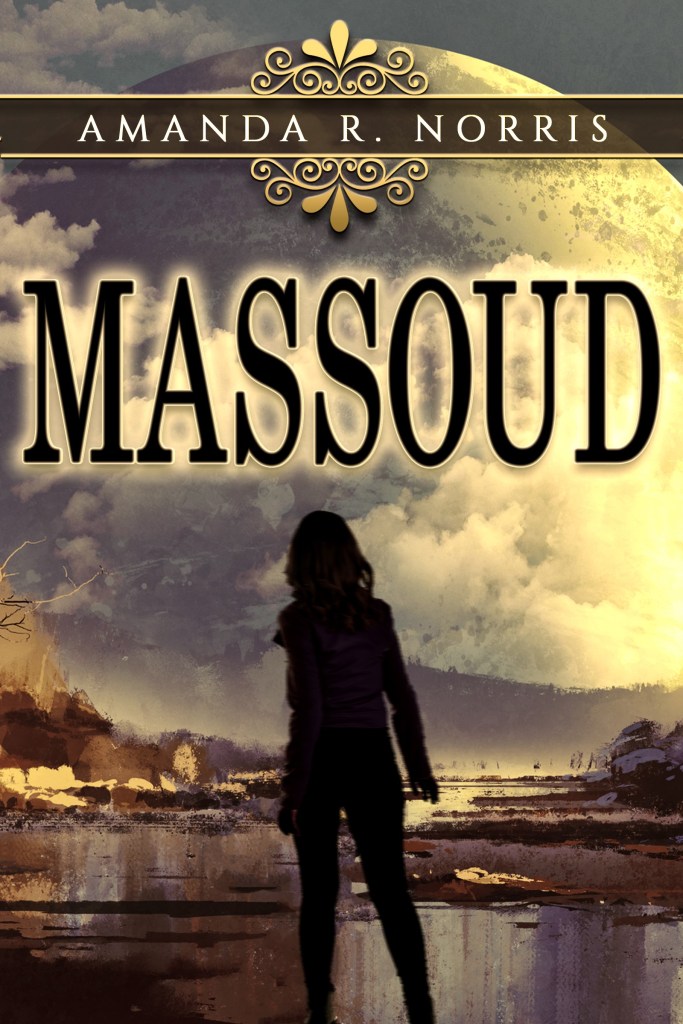

As you can see, the background images have a design that draws the eye to the center of the image (or thereabouts). The type font and scroll around the author’s name are consistent with the romance genre. However, the text does not pop to the eye, especially when the image is viewed on a small screen.
Using photo editing software, I have previously experimented with the brightness and color of these covers:

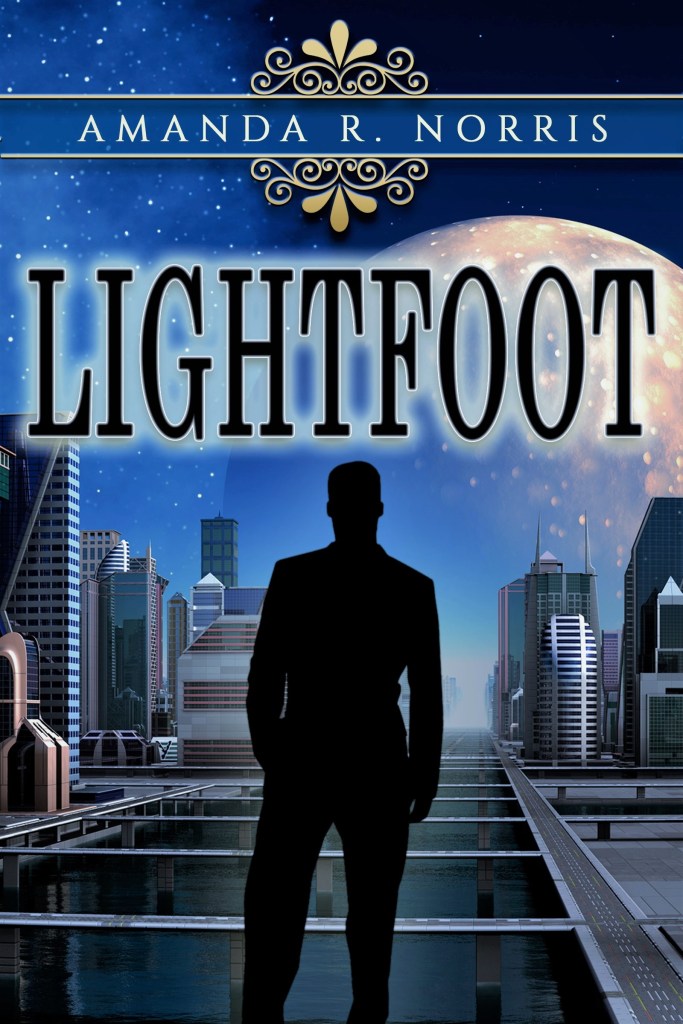
I am proposing to adopt new book covers, self-prepared using Canva.com’s design website. I started the process with a Science Fiction template. (My book series began in the Romance Space Opera genre, but I now see it migrating towards the Space Opera/Science Fiction genre.) This is the template I selected:

Making changes to the template within Canva was fairly intuitive. I restricted myself to using the cost-free elements. However, a broader range of elements (such as shapes and images) is available at a modest price. Some elements are editable, but not all.
Here are the results:
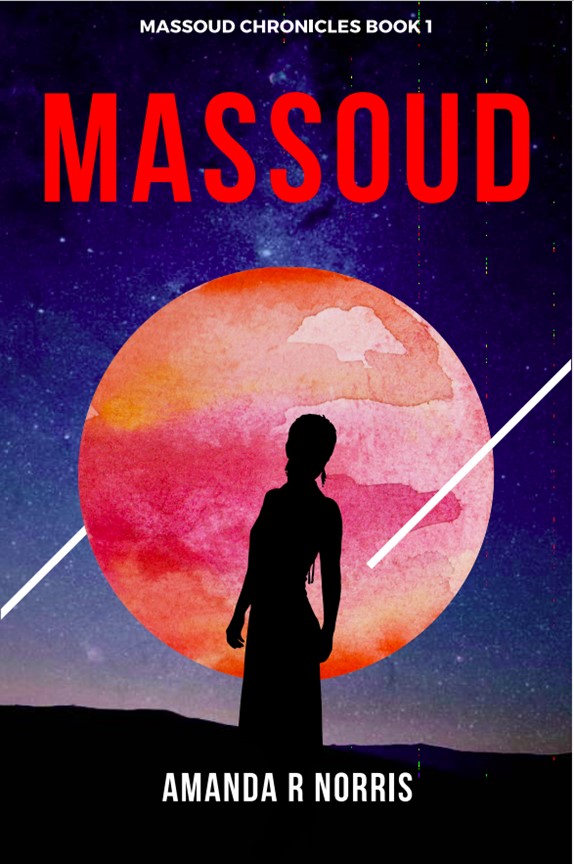

So, is it time for a change? Which set of covers appeals to you most? Let me know.
Follow The Numerate Ninny on Facebook, Instagram, Twitter, LinkedIn or at: https://thenumerateninny.com/
Find my books on Amazon platforms. And by the way, there will be a new one in April!
Wishing you a happy…
A Mathematical Conundrum
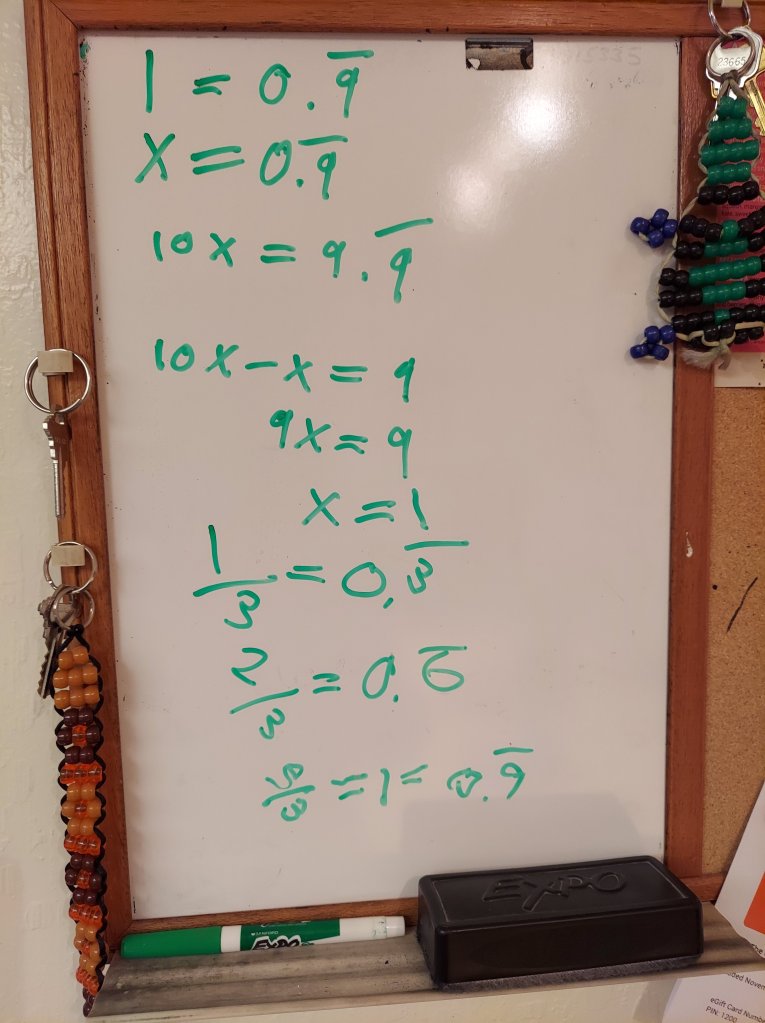
How did your family spend Thanksgiving? This is how our household entertains itself.
Follow the Numerate Ninny on Facebook, Instagram, and WordPress.
Find my books on all Amazon platforms.
Halloween is happening – despite rumors to the contrary
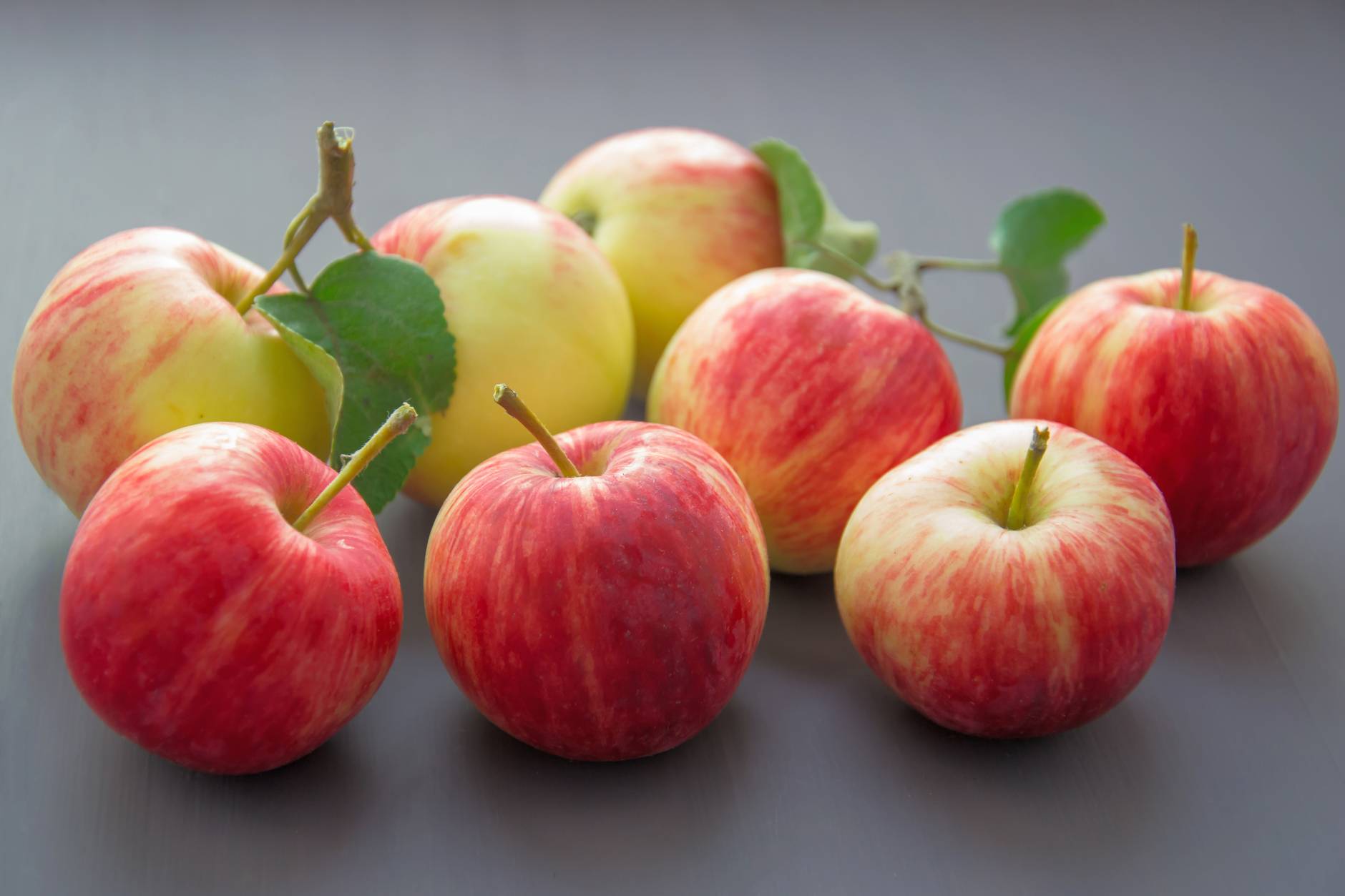
There is no need to lament the limitations on trick-or-treating in 2020. There are plenty of Halloween traditions to indulge in. Here are some ideas for Oíche Samhain:
Bobbing for stuff: Bobbing for apples is a classic Halloween activity. Make it more challenging by bobbing for something that does not float. Place a nut (e.g. a walnut in a shell) in the bottom of the basin and dunk for it. Have towels nearby.
Eating an apple without using your hands: Suspend the apple by a string from a door frame or other support, hold your hands behind your back (no cheating), and see how you get along. You might be delighted to win this challenge. But remember, only people with big mouths win.
Don’t start a bonfire: The most ancient Halloween activity is setting bonfires. Do not adopt this tradition! The Irish fire service lives in horror of Halloween, the busiest night of the year. Even though I’m a fire protection engineer, I reluctantly support this tradition simply because it is as old as the Celtic presence in Ireland. Who am I to challenge thousands of years of history? However, not all traditions should be exported – and this is clearly one of them.

Fortunetelling: Drop an egg in water and divine the future from the shape. You don’t know how to interpret shapes? So what? Neither do I. Have a Baileys and let your imagination run wild.
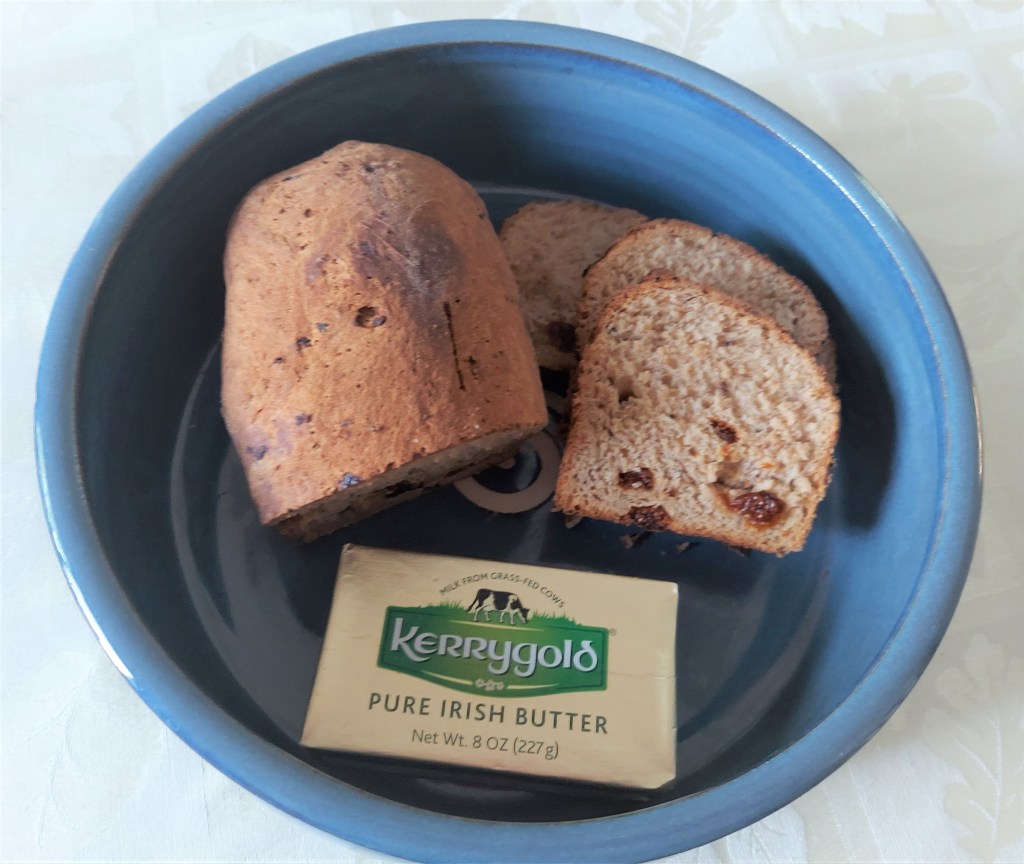
Eat some barmbrack (recipe below): More fortunetelling! If you find an item in your slice of brack, it predicts your future. A coin in the brack means wealth. A piece of cloth predicts poverty. A thimble foretells of spinsterhood/bachelorhood. A ring predicts marriage in the near future. (If a child finds the ring, it should be placed under the pillow to elicit dreams of a future spouse.)
By the way, this form of prediction is totally useless. I did not grow up to marry a skinny, dark-haired man, and I am still working for a living.
Guising: Remember that Oíche Samhain is the night when the barrier between this world and the next is at its thinnest. In other words, your late great uncle Sean may return to castigate you for letting his goldfish die. Prevent this by disguising yourself suitably. In fact, if you can convince someone in the household to dress in your clothing, that person might suffer Sean’s ghostly attentions in your stead. (This is a tip from an evil mother.)
Barmbrack:
The recipe below is a modified version of one found in The Irish Heritage Cookbook by Margaret Johnson (available on Amazon). And yes, there is a reason I use an American recipe for Irish food.
When I first arrived in the US – where the quality of bread is dubious – I tried to replicate Irish bread at home. These attempts failed miserably. However, one day, I had to visit a flour mill for work, and discovered the plant manager was a qualified miller with international experience. He was, therefore, very well versed in the quality of wheat grown different regions of the world. He explained that the levels of gluten in Irish and US flours are so different that recipes do not travel well between these countries. So, if my American friends wish to emulate Irish baking, it is best to use a recipe developed in the US by someone who has figured out the necessary adjustments on your behalf.
(By the by, the plant manager and I also talked about combustible dust hazards. So, I didn’t totally cadge off work. Though, he sent me away with an enormous sack of flour, evidence of our distracted discussions.)
If you are determined to use a recipe of Irish origin in the US, try using cake flour, which has a lower level of gluten than most American flours. It may also be useful to increase the amount of leavening agent in the mixture.
When it comes to baking barmbrack, place the rag, coin, thimble and ring in the brack before you knead it. I like to wrap the items in wax paper for hygiene reasons. Also, when my children were small, I omitted the rag and upped the number of coins in the mix because small children take these predictions too much to heart.
Recipe:
- 4 cups of all-purpose flour
- 1/2 teaspoon of ground cinnamon
- 1/2 teaspoon mixed spice
- 1/4 teaspoon of ground nutmeg
- Smidgen of salt
- 4 tablespoons of cold butter
- 1 package (2 teaspoons) of active dried yeast
- 1/2 cup superfine sugar
- 1 1/4 cup milk
- 1 egg beaten (how cruel)
- 1 cup sultanas/golden raisins
- 1/2 cup raisins/dried currants
- 1/4 cup mixed candied peel
- 1 egg yolk beaten with 2 tablespoons water
Sift the flour cinnamon, mixed spice, nutmeg and salt together in a medium bowl. With a pastry blender, knives, or your fingers, cut or work the butter into the flour until it resembles course crumbs. In a medium bowl, combine the yeast with 1 teaspoon of the sugar. In a small saucepan, warm the milk until bubbles form around the edges of the pan, then add 1 teaspoon to the yeast mixture.
Pour the remaining milk and the egg into the yeast mixture. Combine with the dry ingredients and add the remaining sugar. Blend well with a wooden spoon or knead with your hands in the bowl until the dough is stiff.
Fold in the raisins, currants, and mixed peel. Cover the bowl with a damp cloth or plastic wrap ad let sit in a warm place until doubled in size, about 1 hour. On a lightly floured board, knead 2 to 3 minutes. Divide the dough in half and form into 2 balls. Place each in a greased 9-by-5 inch loaf pan and let rise in a warm place for 30 minutes.
Preheat the oven to 350⁰F. Brush the top of the loaves with the egg yolk mixture to glaze. Bake until the bread is golden and a skewer inserted into the center comes out clean, about 1 hour. Turn onto wire racks and let cool completely before cutting.
Numerate Ninny Notes on the Recipe:
Firstly, I never let the barmbrack cool completely before eating it. What an insane suggestion! Secondly, based on a recent decision by the Supreme Court of Ireland, barmbrack is too sweet to meet the legal definition of bread, so let’s just call it a brack.
For convenience, I have adapted the recipe for use in my bread machine. I place all the wet ingredients in the machine first (not all manufacturers recommend this) and run the machine on the dough cycle. I then take the dough out, introduce the fortune telling elements, knead and split the dough, and put it in pans to rise for another half hour before baking. With this method, I find that conventional granular sugar works well enough, which saves a trip to the supermarket. However, this approach causes the fruit to disintegrate and be less visible in the finished brack. Whether this is a good or bad thing, is a matter of opinion.
Another adaption I have made to the recipe is to use less fruit than recommended. Candied/glacé peel is hard to find where I live, so I either replace it with other fruits or simply omit it. For the fruit, I often soak it in cold tea for an hour or two before using it in the recipe.
Follow The Numerate Ninny on Facebook, Instagram, Twitter, LinkedIn or at: https://thenumerateninny.com/
Find my books on all Amazon Platforms.
Fireboat! Ahoy!
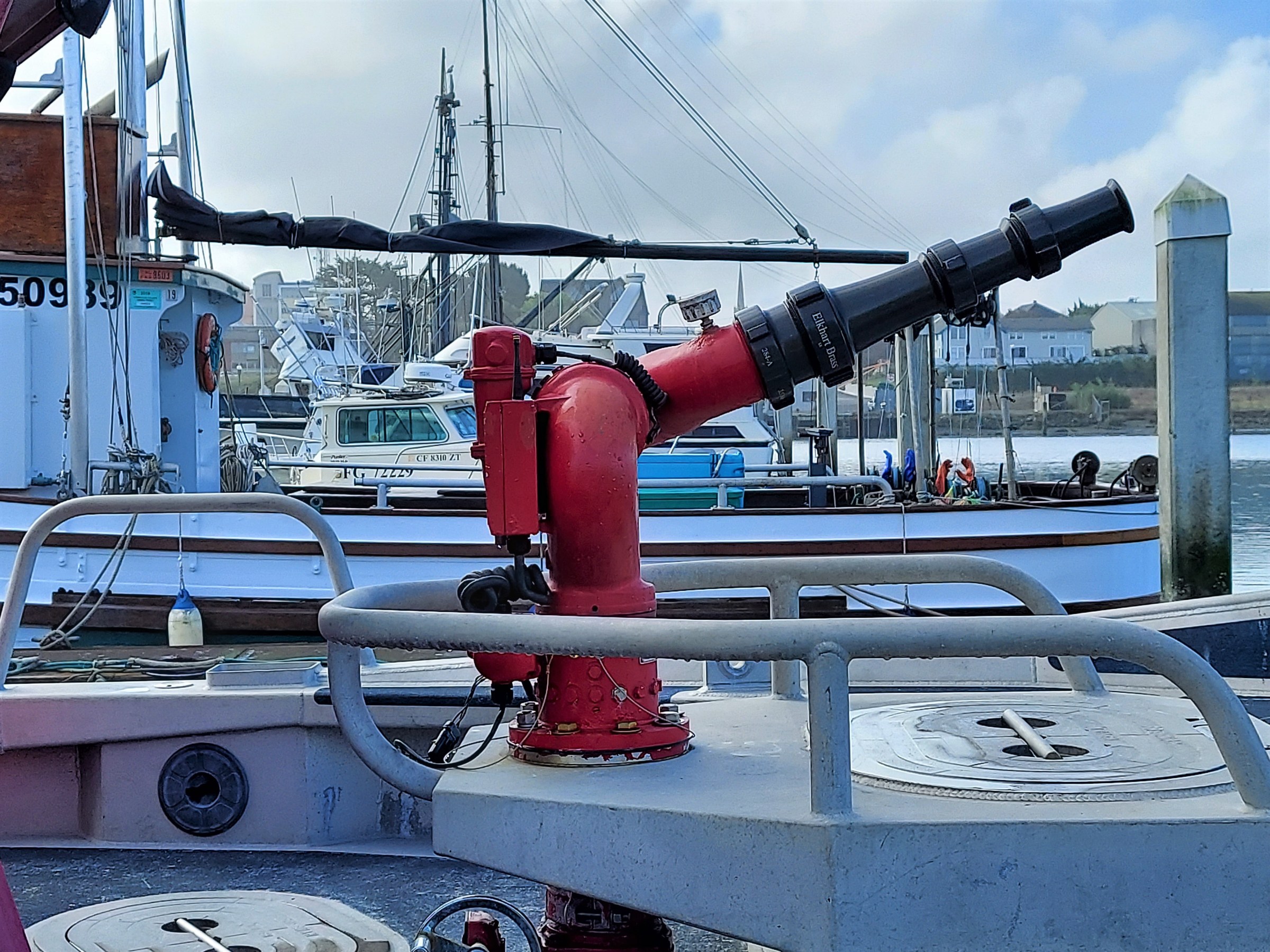
Serendipity! I spent a dinner hour staring out at a fireboat.
This naturally led to speculation about the unfamiliar piece of equipment. Where are the water intakes? How is the water pressurized? What’s its range? How often is it deployed? How fast can it be staffed? Etc., etc., etc.

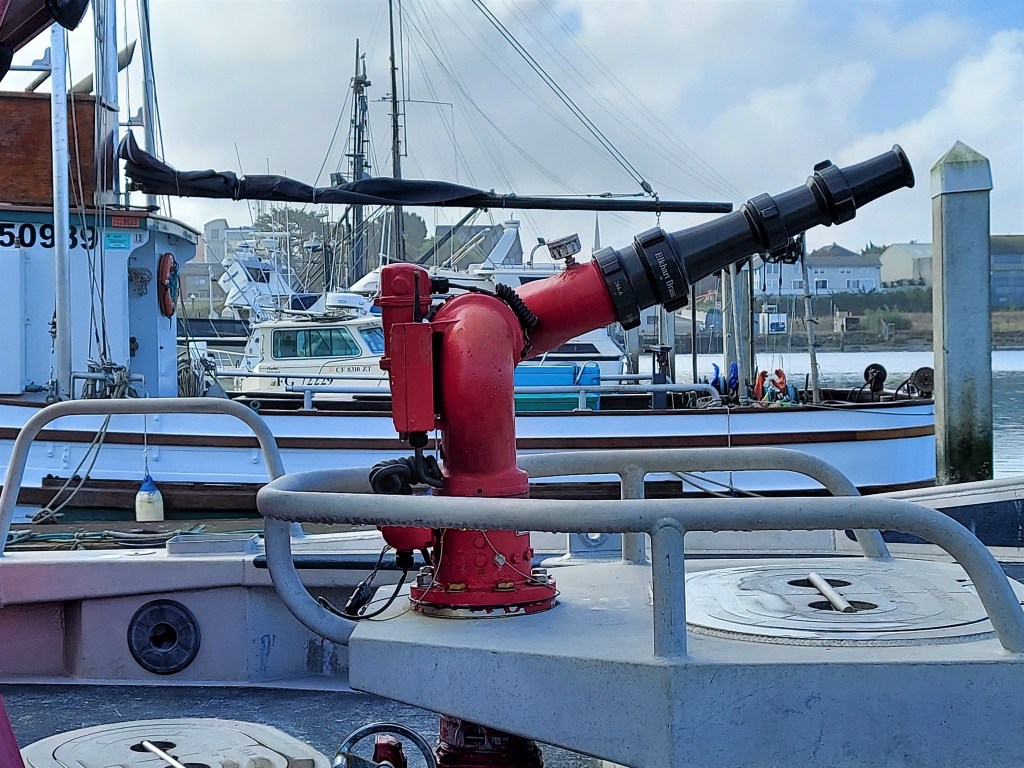
At the first opportunity, I took a few snapshots of the little red vessel. Visual inspection revealed the following facts: The boat has two monitors, and it has a two standard hose connections and pumper connection.
The back platform is near water level, limiting its capabilities in rough seas. Also, the vessel has shallow draught, appropriate for the waters in which it sails. The vessel is operated by the Humboldt Bay Harbor District. Although the port is a deep water port, the bay is characterized by sandbars and lagoons.

However, simple observation did not answer all of my questions about this interesting boat. Loitering with intent did not achieve that end, either. (And the hubby and I were loitering very effectively. I know this because the operator of a neighboring vessel initiated the type of friendly chat adopted when one is suspicious of a stranger. Thankfully, we were sufficiently middle-class and middle-aged to engender a misguided belief in our good character.)


Incidentally, there are disadvantages to being married to a fellow engineer. A normal spouse will discourage certain behaviors, but a spouse who shares your twisted mindset will think the oddest ideas are sound. In this case, neither of us were able to let our ignorance persist. Driven by curiosity, we hunted down a hapless harbor employee and interrogated him ruthlessly. (Okay, he looked bored and was happy to talk to anyone).
We devoured the few additional snippets of data that this gentleman could provide: The fireboat has only been used occasionally, primarily to support land-based operations. The water stream is taken directly off the turbine propulsion and has a nominal rating of 3,000 US gpm. Since the turbine must be running for the water to flow, the craft can be a little difficult to handle when in use. I bet! Monitor discharge has a range of about 100 ft. The vessel is crewed by a captain and a deckhand, and the local fire department provides a firefighting crew. The output from the the two monitors can be combined into one stream. (I refrained from mentioning why this was not necessarily a good thing. However, I am sure it’s a lot of fun during training.)
By the way, the hubby and I think this kind of thing is part of a romantic getaway. Sigh! We should be featured in a Hallmark movie, should we not?

Follow The Numerate Ninny on Facebook, Instagram, Twitter, LinkedIn or at: https://thenumerateninny.com/
Find my books on all Amazon platforms.
On the Art of Writing for Business

Excellence in business writing is sometimes pursued, often neglected, and seldom achieved.
Improving the quality of our technical and business writing is a career-long pursuit. However, our pursuit is not a solitary one. We can learn from our predecessors.
Philip Stanhope, Lord Chesterfield, was arguably the greatest writer in the English language. His reputation was not garnered from writing poetry or plays, but from letter writing. His letters of business are still lauded and printed today. In 1751, he provided the following advice:
The first thing necessary in writing letters of business, is extreme clearness and perspicuity; every paragraph should be so clear, and unambiguous, that the dullest fellow in the world may not be able to mistake it, nor obliged to read it twice in order to understand it. This necessary clearness implies a correctness, without excluding an elegancy of style.
Allowing for the evolution of language between eighteenth and twenty-first century, this guidance is remarkably modern. Chesterfield goes on to provide more specific advice:
Let your first attention be to clearness, and read every paragraph after you have written it, in the critical view of discovering whether it is possible that any one man can mistake the true sense of it; and correct it accordingly.
The truth is that we can identify most errors in our writing without the help of others. If you have the opportunity, let your writing rest awhile, evaluate it with a fresh eye, and then self-correct your work.
When it comes to editing, modern business writers have an advantage over their eighteenth-century peers. Cutting and pasting no longer require a scissors and glue, and revisions no longer demand a fresh piece of paper and a sharpened quill. Comparatively speaking, professional writing requires little effort today.
Our pronouns and relatives often create obscurity or ambiguity; be therefore exceedingly attentive to them and take care to make out with precision their particular relations…it is better to repeat a name, though unnecessarily, ten times, than to have the person mistaken once.
Due to unclear language, I waste an estimated ten to twenty percent of the time I spend reading for work. A significant proportion of that time is expended in disentangling abused pronouns.
As a consultant, my time is someone else’s money. So, this is an important point to address. Over the years, I’ve burned through a lot of money trying to determine which it, he, or they is being referred to in an email, letter, or specification.
When writing for business, please do not hesitate to repeat the noun! I know that your English teacher told you not to use the same word again and again in your assignments. However, in business and technical writing, repetition is often the ideal approach.
Also, ensure each pronoun applies to the last noun used in text. If you think the meaning of a sloppily applied pronoun is obvious to others, I assure you, it is not.
Business does not exclude (as you might possibly wish it did) the usual terms of politeness and good breeding; but on the contrary, strictly requires them.
It seems we must be polite in our business communications!
Thankfully, we no longer need to know the correct form of address for the various gradations of nobility. However, we do need to navigate the more common honorifics.
As someone who has received many letters directed to my male alter ego – Mr. Norris – I can confirm that incorrect titles sour business relationships. If you make an error in this regard, apologize promptly, and do not repeat the mistake. I have had to humble myself in this fashion once or twice over the years.
In the US, it is perfectly acceptable to address a new contact by first name. This is particularly useful in a culture that habitually gives traditionally male names to females and uses family names as first names.
However, if you are in a nation where a more formal approach is appropriate, make some effort to discover the person’s gender and/or title. LinkedIn can be useful in this regard. If a woman’s preference is unclear, please use Ms as her title. Because I have never changed my name, I still receive letters addressed to Miss Norris. Because I am married, I receive letters addressed to Mrs Norris. Both are incorrect and, worse, the cultural assumptions behind these choices make me cringe. Ms may not be the optimum form of address, but it is generally an inoffensive default.
Furthermore, if your title is important to you, include it in your communications so that your correspondents are aware of it.
Let your periods be harmonious, without seeming to be laboured: and let them not be too long, for that always occasions a degree of obscurity.
This is advice applies to sentence length (periods). When writing for fun, I love to compose long convoluted sentences, a habit that sometimes bleeds into my work-related writing, making my meaning difficult to follow and, thereby, running the risk of confusing the dullest of fellows, and utterly defeating the purpose of my efforts. When that happens, I pick up a figurative axe. I chop my sentences up. I check those pesky pronouns. I proof-read. I correct my errors. This results in more sentences and fewer words. However, I communicate better. My ideas are clearer. Work is easier.
Although much of Lord Chesterfield’s advice is timeless, some is dated. For example, his advice on the quality of orthography and on ‘neatness in folding up, sealing, and directing your packets’ has little validity today. However, the underlying concept behind this outmoded advice is sound. Presentation is important, and modern writers have the tools to impress. Bullet points, italics, indentation, and font can all be used to improve the clarity of communication.
Lord Chesterfield’s advice was specifically formulated for his son, a young man he was grooming for a life in diplomacy and politics. To the father’s chagrin, the younger Stanhope was not as talented as his parent in either field. However, the elder Stanhope had some advice on that topic too:
Business requires no conjuration of parts nor supernatural talents, as people unacquainted with it are apt to think. Method, diligence, and discretion, will carry a man of good common sense, much higher than the finest parts (abilities), without them, can do.

 thenumerateninny.com