I confessed to my husband immediately. He called me murderer.
When my youngest son heard about it, he said Mom in a chastising tone.
Sadly, there is no family support in an hour of crisis.
(Note: My hubby should have called me murderess because, when it comes to homicide, the feminine is more dramatic than the masculine.)
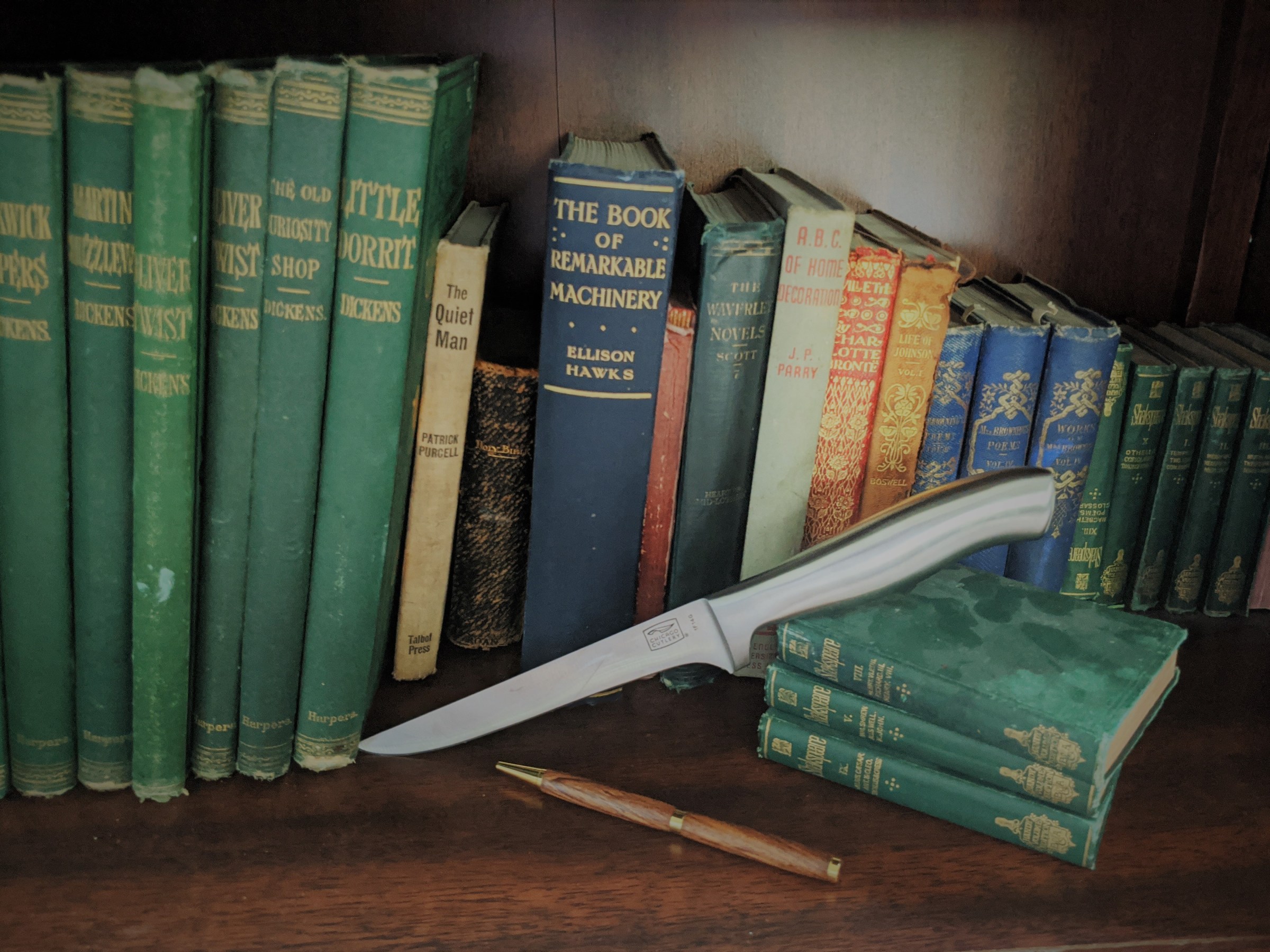
The truth is, I don’t deserve criticism for killing that man. I merely decided he should die, and I made it happen. I know my actions were premeditated, but that doesn’t make it murder.
I feel no remorse because it was a necessary act. And I did the deed in the kindest way possible. The victim was unconscious for the entire time and I made sure he bled out quickly.
It was a messy business, but I have no blood on my hands. I’m too fastidious for that. I will not emulate Lady McBeth; only Covid 19 makes me wash my hands repeatedly.
I don’t really understand why my family was discommoded by a matter so ordinary. I gave a man life; I took it away. In the world of fiction writing, I am omnipotent. I exercise justice, or put aside fairness, on a whim. I am the master (mistress) of all life. And at the time of my choosing, I can eliminate a person with a few taps of my fingers.
For a woman who claims to write romances, I kill off an excessive number of characters. What does this reveal about my personality? Too much I expect. Does the idea of romance make me murderous? Watch out, husband!
Have I ever killed ruthlessly, in real life?
Yes, and pregnancy made me do it. It is, after all, a state that pushes many women to the edge.
In a mad fit of responsibility, I refused to handle chemicals. (My baby was not going to be born glowing green.) So, when ants invaded my garden, I improvised with a kettle of boiling water, scalding and drowning a whole community of individuals in one fell swoop. I was delighted with the result! I had found a way to kill that was non-toxic and gentle to the environment. I have been killing in this fantastic manner ever since.
Despite the necessary termination of one of my characters, my third book is still incomplete. With a bit of luck, the protagonist and the hero (two separate individuals) will sort themselves out by the end of the year. If they don’t, I might be tempted to do something I’ll regret…
I’m a pusher — and my drug of choice is oxygen. My little tank goes where I go, advertising my limitations to the world. However, it also presents an opportunity for people to prove themselves ‘nice’. To allow me to pass, pregnant women, burdened with bags and babies, hold doors open for me. So that…
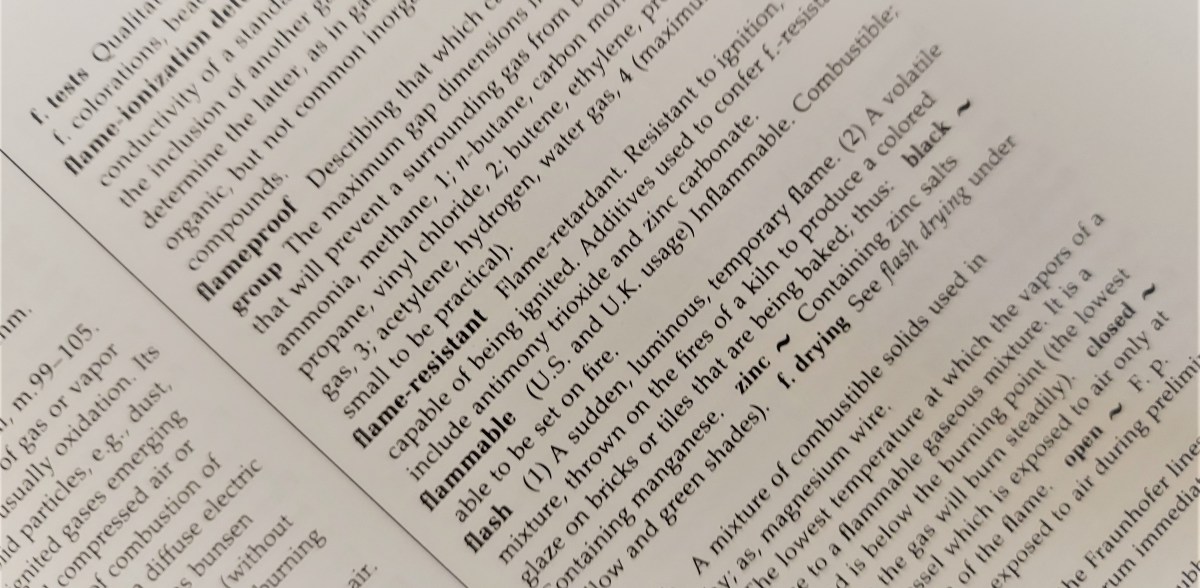
Scientific language is a fickle beast. If you’ve been around for a few decades (and have been exposed to changing language) your experience can be a liability. Take, for instance, the word flammable. It pretends to be an uncomplicated word. In fact, the OED simply defines it as: “that which can burn easily” And dictionary.com…
We hear so much today about toxic masculinity, I thought I would balance that trend with a tale of nurturing masculinity. Last month, my eldest son spent his ASU spring break helping his father in providing cancer care to his mother. The following week, my youngest spent his WSU spring break doing the same. (Needless…
Like other human oddities, the reason for this can be found in my formative years. Let me tell you the story…
Once upon a time, there was a young engineer who lived in Britain. She traveled a lot for work, and studied explosions and fires for a living. Most shockingly of all, she was an Irish national.
It is quite possible that she fit a profile, a profile that was considered very dangerous in the 1990s.
This profile meant that her near-weekly trip through Heathrow Airport involved a bag search and a body pat-down. Unfortunately, her English colleagues never believed she needed extra time to get through airport security, and at least one expensive flight was missed for that reason. (Believe me, this is not something you want to explain on your expense report.)
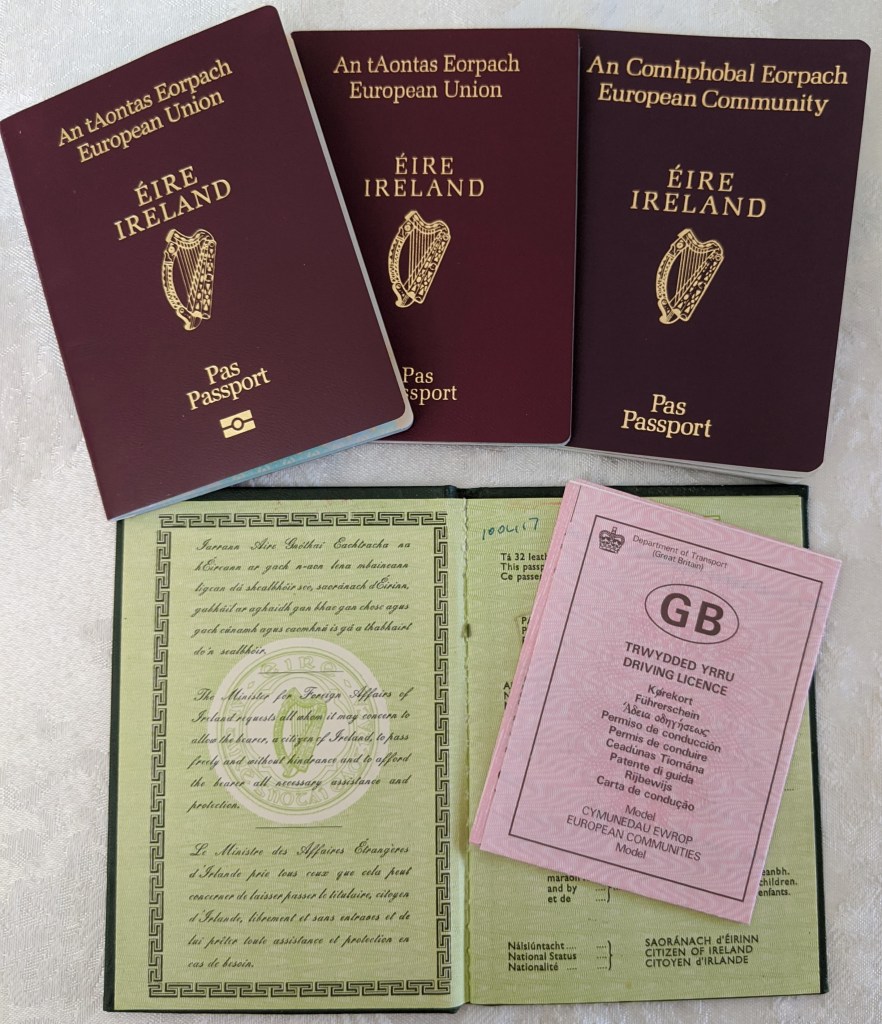
Can I see you papers? The classic proof of identity.
Being profiled engendered odd behavior: When the young engineer traveled with tools, those metal objects proved to be a little too fishy for the comfort of airport security. She soon learnt it was best to freely offer up her baggage for examination rather than be pursued through the airport for that purpose. In fact, she adopted the habit of contacting security during check-in, to get the whole business out of the way as efficiently as possible.
Being profiled damaged professional relationships in unimaginable ways: Once the Irish engineer had to travel with the prissiest of men. At the last minute, she realized she had forgotten to pack sanitary supplies. Since there was nowhere in her overstuffed baggage for an entire box of necessities, she tucked individual sanitary pads into every nook and cranny of her luggage. At Heathrow, the ever-so-predictable request to examine her bag was made. When security pulled open the zipper of her luggage, sanitary products flew out across the counter. Everyone scrambled to catch the items as they fell back to earth. The engineer’s poor, poor prudish colleague could not speak to her for days.
Being profiled destroyed everyone’s peace of mind: On another occasion, the engineer had to depart from a regional airport in the north of England. A severe delay in departure tested everyone’s patience. At last, the small plane was ready for boarding. The police constable overseeing the embarkation pricked his ears at the sound of an Irish accent. He required the young woman to stop and fill out a Prevention of Terrorism form. (At that time, Irish people in the UK had to fill out this form if they sneezed, or walked, or engaged in other dubious activities, like standing in airports). Her fellow travelers, delayed yet again, were deeply disgruntled.
“What’s going on?” a man behind her asked, irritated.
“She’s a terrorist,” someone else replied, deadpan.
Dogged by distrust, she boarded the little plane. Happily (or is it sadly), she had no opportunity to engage in her intended criminality (stealing the airline magazine). There were thirty sets of eyes watching her every move.
And this ridiculousness was bearable.
Why?
Was it because she had been harassed in such a mannerly fashion? (Police constables were terribly polite back then.) Was it because a short myopic young woman could look up at the blurry face of authority and think that, if only it came into focus, it might be friendly?
No. Those were not the reasons the situation was bearable.
It was bearable because of the dichotomy.
While every police force in the UK was stalking the Irish engineer’s movements, the general population treated her as an insider.
“I have a problem with immigrants who don’t make an effort to fit in,” she would be told, confidentially.
“Oh, like me?” she would reply, because she never made any effort to fit in.
Flustered, “No, I didn’t mean you.”
The speaker’s eyes would stray to another person, a fellow-countryman, someone who had been born locally, shared the same education and accent as the speaker, and had regrettably adopted the same taste in dress. However, the Briton being eyeballed looked very much like a grandparent who had immigrated from the Caribbean, or the Indian subcontinent, or some other place that was not Europe.
“Oh, he’s not an immigrant,” the Irish engineer would declare disingenuously to her English acquaintance. “He’s from Essex.”
Her companion would then patronizingly explain how his statement should have been interpreted, because – clearly – she did not understand what team she was supposed to be on. The explanation usually started with the words:
“I’m not a racist…”
So, the Irish engineer started a semi-scientific study. She listened for the words ‘I’m not a racist’ and took note of what accompanied those words. The results of her thirty-year, academically indefensible, study are as follows:
1. Most of the time, the first word following ‘I’m not a racist’ is ‘but‘.
2. At least half of the time, the words after ‘I’m not a racist’ are blatantly racist.
3. When the words after ‘I’m not a racist’ are not blatantly racist, they are subtly racist.
To be fair, I think the words ‘I’m not a racist’ actually mean ‘I’m trying not to be a racist, but I’m not sure of how to go about it’.
We are human; we often fail at difficult things. So, I accept that changing the way you think is incredibly hard.
But still, I will never say ‘I’m not a racist’.
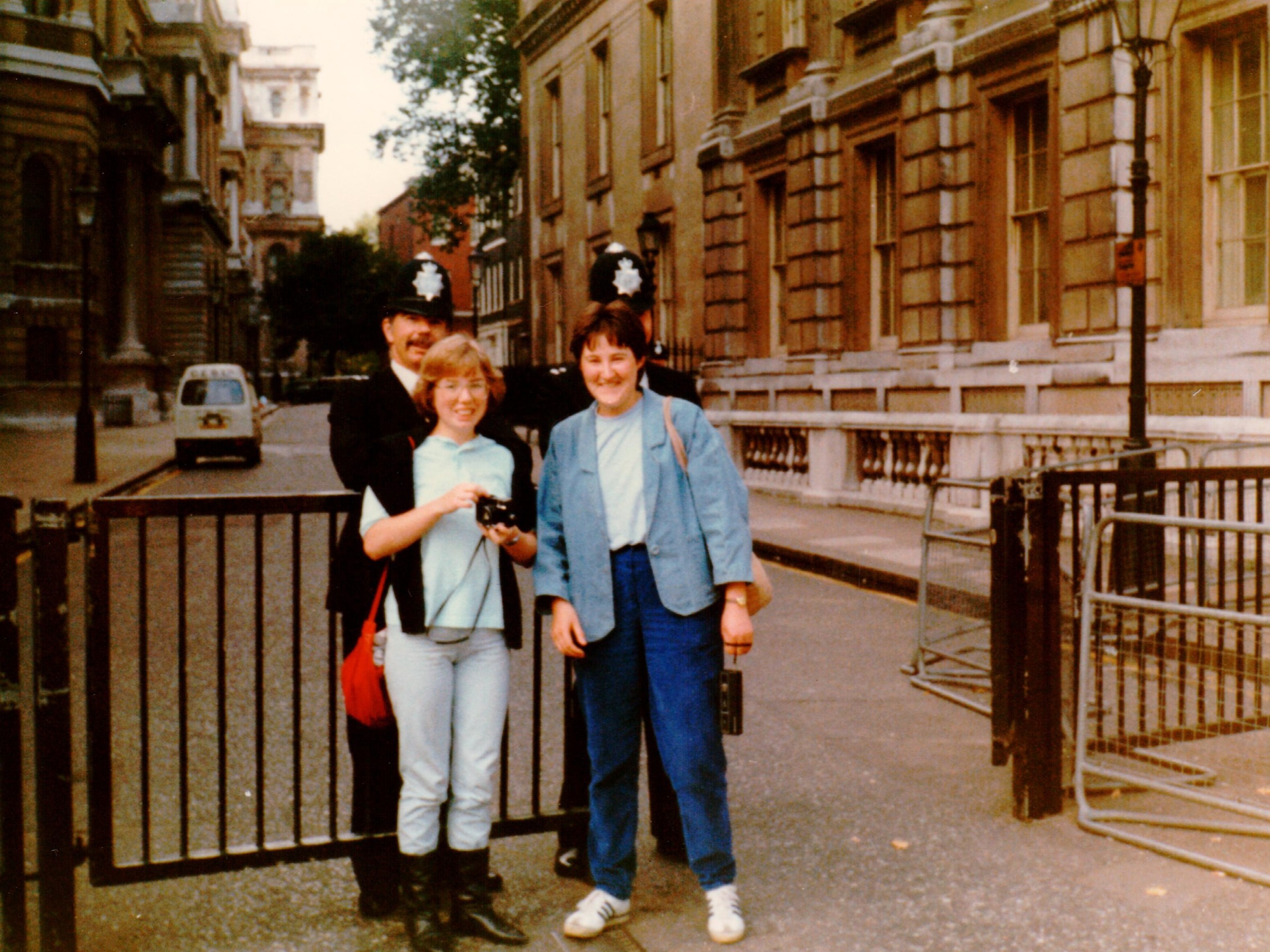
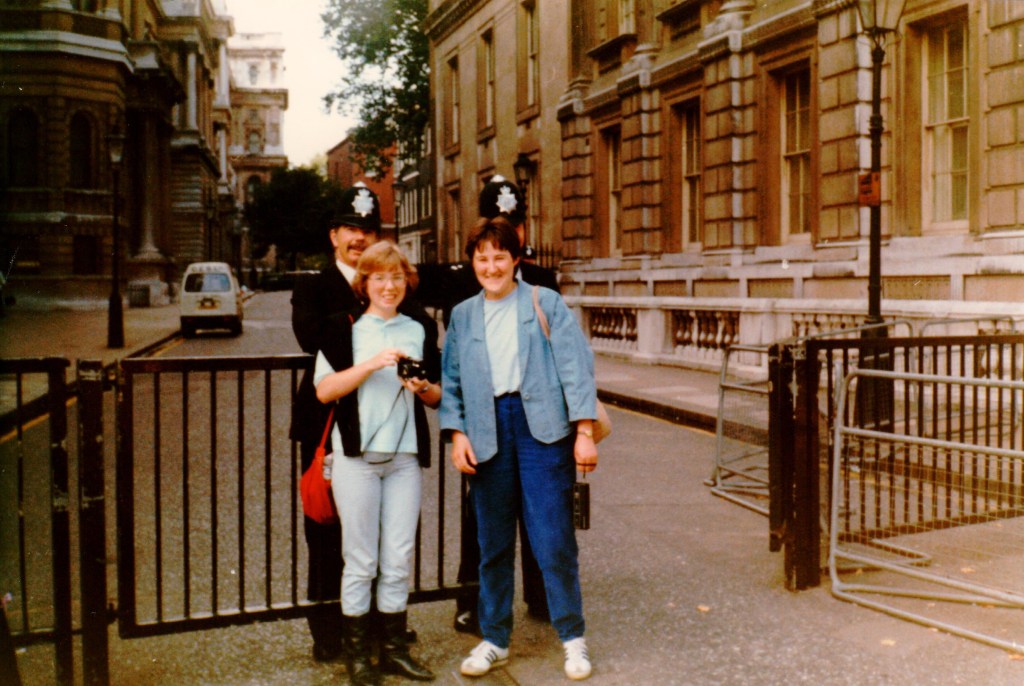
The only photo I could find of a couple of Irish engineers with a couple of PCs c.1987 outside Downing Street. Hi Bernadette!
Here is a link to a popular poem about being Irish. Unfortunately, the first line is not factual:
It’s humbling to be in self-quarantine for a number of weeks. You quickly realize how dispensable you are. Your family does not starve. Your home does not crumble. The desert does not swallow your garden. In fact, the sun – perplexing star that it is – continues to rise and set each day, utterly without your assistance.
Even more disappointingly, your employer continues to function, and your clients continue to manage their businesses – quite without any aid from you.
How very lowering! You are simply not necessary to the planet’s existence.
(Doesn’t everyone know that nothing gets done unless mother tends to it!)
Don’t worry if your ego is crushed by the world’s survival in your absence. Consider your unimportance a positive. Egotism is a cage manufactured from the expectations of others. So, why confine yourself to such an irrelevant space? There is a songbird trapped in that cage, a little creature that is closer to your true nature. You’ve been ignoring it. Now you can pay attention to it.
When the world looks away – or when we sequester ourselves from the world – we can open the cage door, let the bird out, and leave our captivity behind. We can stretch our wings, free our true selves, and abandon our weighty egos.
In other words, it is liberating to be replaceable. It is liberating to know we may fly our own path without severely impacting the little corner of the world we inhabit.
Sadly, this kind of psychological freedom is illusory and temporary. Quarantine is normally connected to events and health conditions that restrict our ability to pursue loftier ambitions. And, ultimately, we must rejoin the ‘real’ world, and be hemmed in by deadlines, technical questions, professional goals, and laundry.
At the end of quarantine, responsibilities return very quickly. Our newfound freedom evaporates when faced with those who have been covering our normal duties: They want to rest or return to their own primary concerns. They managed without us, but at a cost to themselves.
In the end, we rediscover that our mundane, everyday activities make an important contribution to the world. Yes, there are others who can do what we do – they have sufficient skills – but they cannot carry the burden alone, and they cannot carry it indefinitely.
The essential lesson learned from our quarantine is that our contribution, although necessary, is not as unique as we once believed.
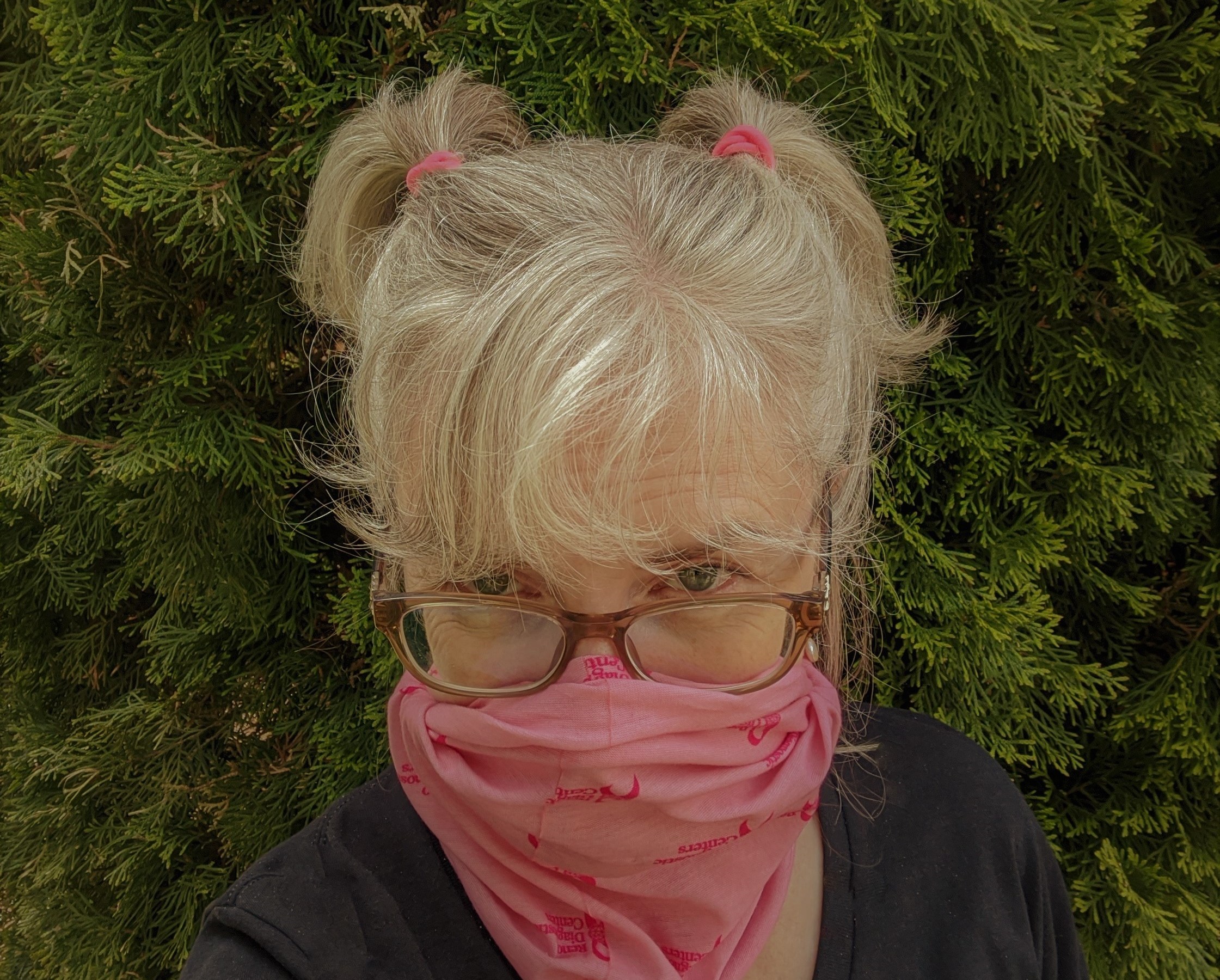
Does pink make you feel better when you are ill? Nah!
Choose your pleasures for yourself, and do not let them be imposed upon you. Follow nature and not fashion: weigh the present enjoyment of your pleasures against the necessary consequences of them, and then let your own common sense determine your choice.
– Philip Dormer Stanhope, Lord Chesterfield, Letters to his Son on the Art of Becoming a Man of the World and a Gentleman, 1747
If there ever was a test of how well we enjoy the bare bones of our lifestyle, it is the social distancing required by the Covid 19 pandemic. The reflected pleasures of companionship have all but disappeared, and our true sentiments towards our daily activities are quickly becoming apparent. Finally, we will discover if we enjoy what we do with our time.
The truth is that our pastimes are often not our own; they are borrowed from from our community. It is natural to do what our peers do because we relish social interaction.
I don’t disparage the idea of choosing hobbies based on what our friends or family enjoy. At times, it is necessary to participate in the interests of others. Doing something that is ‘out of our box’ is a mentally healthy behavior that expands our knowledge and promotes tolerance towards others.
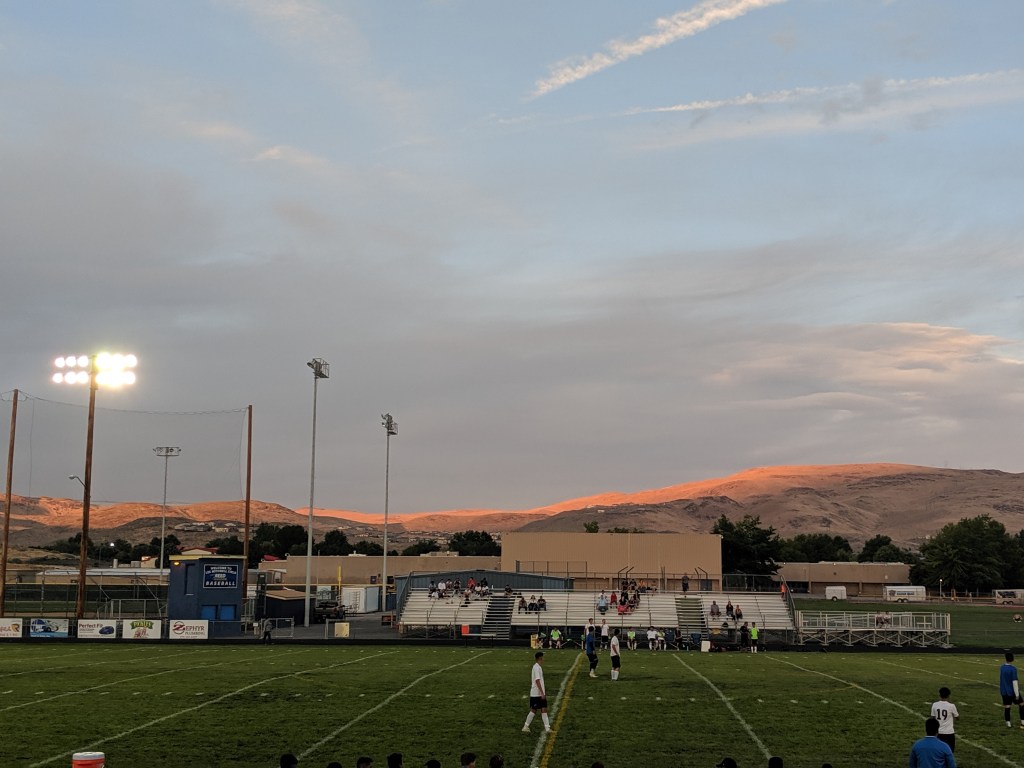
For example, I have gladly (I’m only being somewhat dishonest here) sat through many sporting events, examining the structural design of the arena, watching the pretty sunsets, or enjoying the enthusiastic response of my companions to some action on the field. (Or is it a court?)
However, to pursue the interests of others exclusively, at the expense of your own enjoyment, is a dangerous business. You will discover this truth, now the only company you have is yourself. If, in the past, you have simply echoed the enthusiasm of others in the selection of your hobbies, how will you continue to enjoy those activities without encouragement?
In this time of isolation, I hope you are pursuing your genuine interests – or discovering them for the first time. The only person you have to please is yourself. You are alone; you are free. No false ideas of what should interest you, based on your gender or age or race or culture, can limit you. So, try something new. See if you can tap dance to a symphony. Sing outside the bath, and initiate a hoarding rush on earplugs in the neighborhood. Try cooking German sausage in an Asian soup. Learn to speak Mongolian in your eighth decade. Why not? No-one is watching.
Finally! I watched the movie Hidden Figures (and enjoyed it).
However, seeing Katherine Johnson’s routine twenty-minute dash from her desk to the ‘Colored Ladies Room’, triggered a conversation about my own ‘Ladies’ experiences at the beginning of my career.
My first assignment was at a sprawling chemical site where only two buildings had women’s facilities. One was located near the main gate and the other was at the center of the plant. There were times when it took up to 15 minutes to get to where I had to go, to do what I had to do. Thankfully, my younger bladder was much more patient than that organ is today.
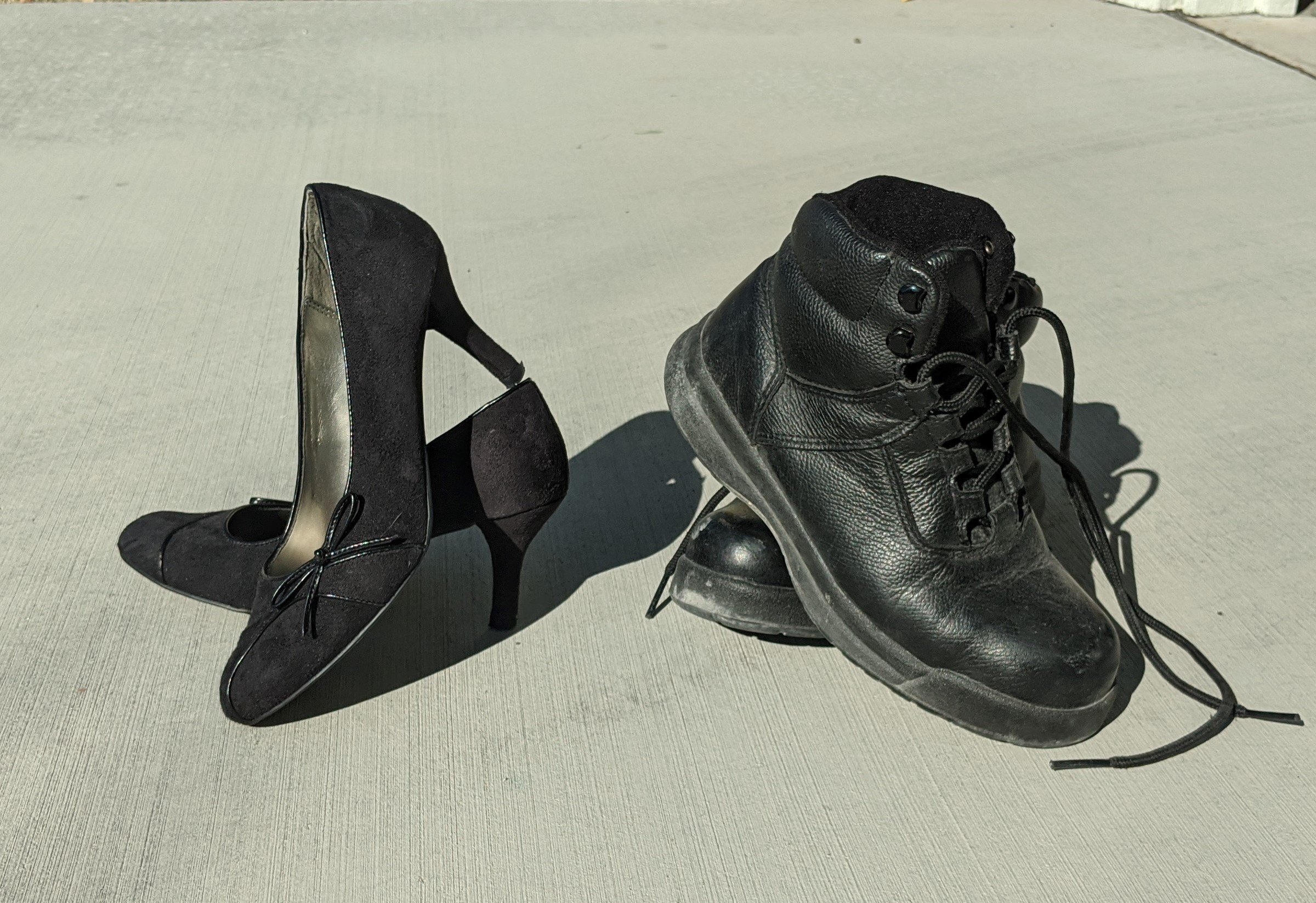
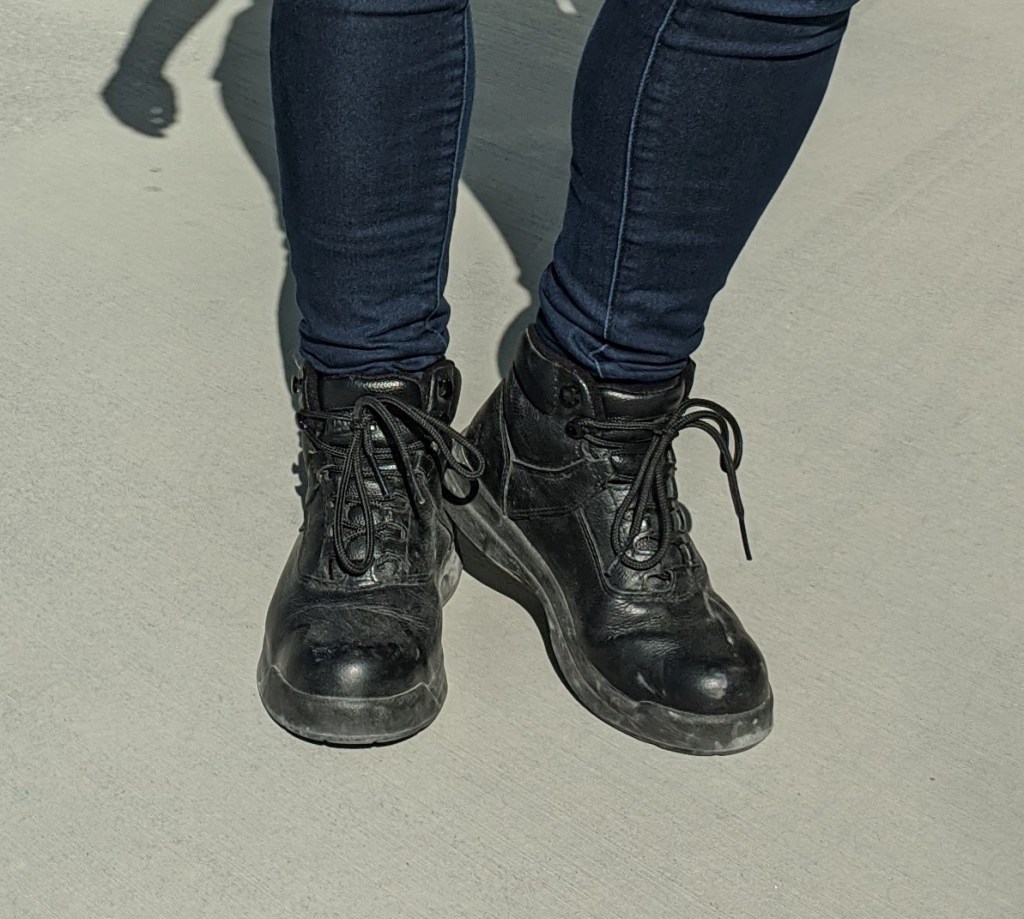
Unlike Mrs. Johnson, I was not required to wear high heels in the workplace. I wore safety shoes. (Safety boots were not available in my size at that point in history.) Any mad dash I made to the Ladies was done with an inelegant clunk.
The women of Hidden Figures may have been excluded from the use of nearby bathrooms because of their race. In my case, and after hours of lost work time, it occurred to me that I was not excluded from the use of the facilities by virtue of my gender.
I concluded that the toilets (to be found in all the control buildings) weren’t restricted to the use of men. The plant was so old, that the rooms were simply labeled ‘Toilet’. Gender was implied when you opened the door and were confronted with a row of urinals.
To imply something is not the same as explicitly stating it. Being me, I determined that I had as much right to use the convenient conveniences as my male colleagues. To do so, I adopted a technique which exploited my feminine voice:
Step 1: Hammer on the door labeled ‘Toilet’. Await a response.
Step 2: Crack the door. Yell I’m coming in to use the toilet.
Step 3: Stand back for approximately sixty seconds while the men evacuate the space.
Step 4: Thank the exiting men in the hope of quelling their blushes.
Step 5: Enter and use the facilities while singing in a jarringly loud fashion. (Being tuneless is an advantage.)
Final Step: Welcome the port-a-potty (sporting a graphic of a girl) that magically appears some weeks later.
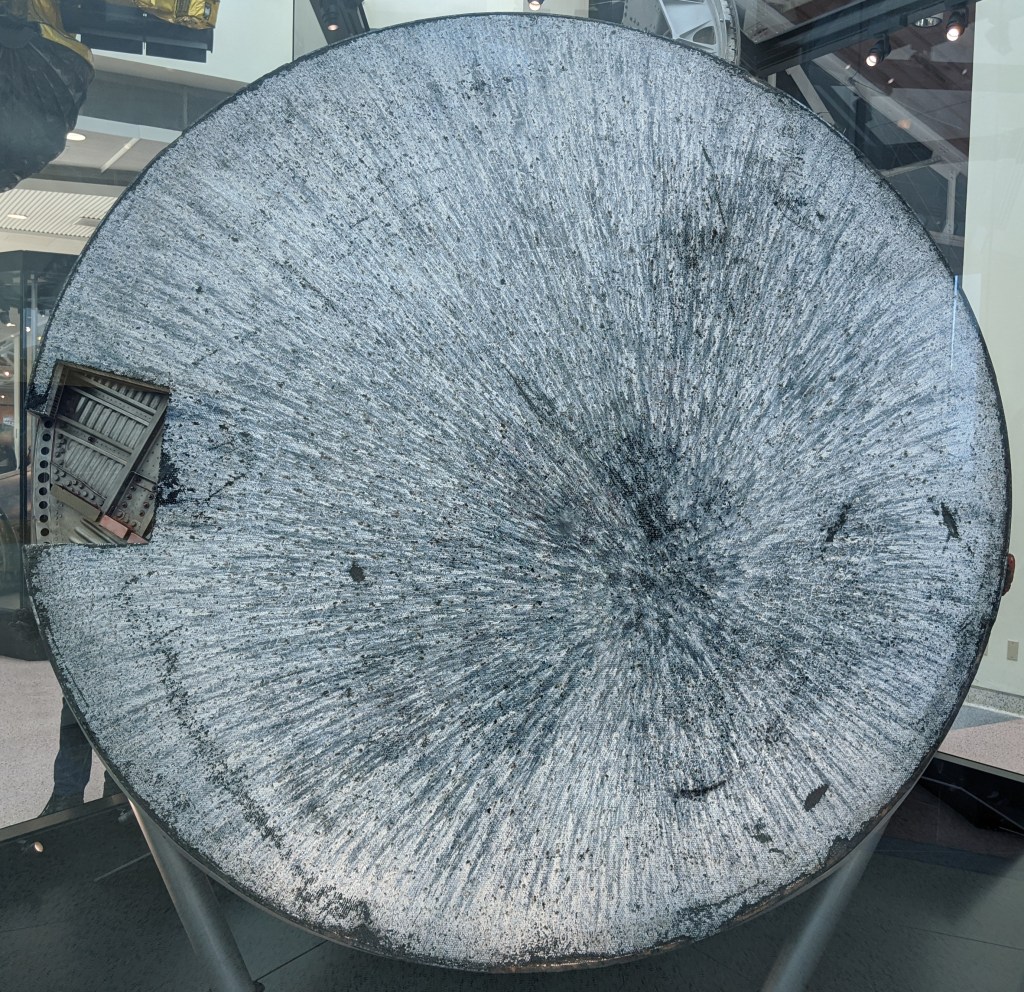
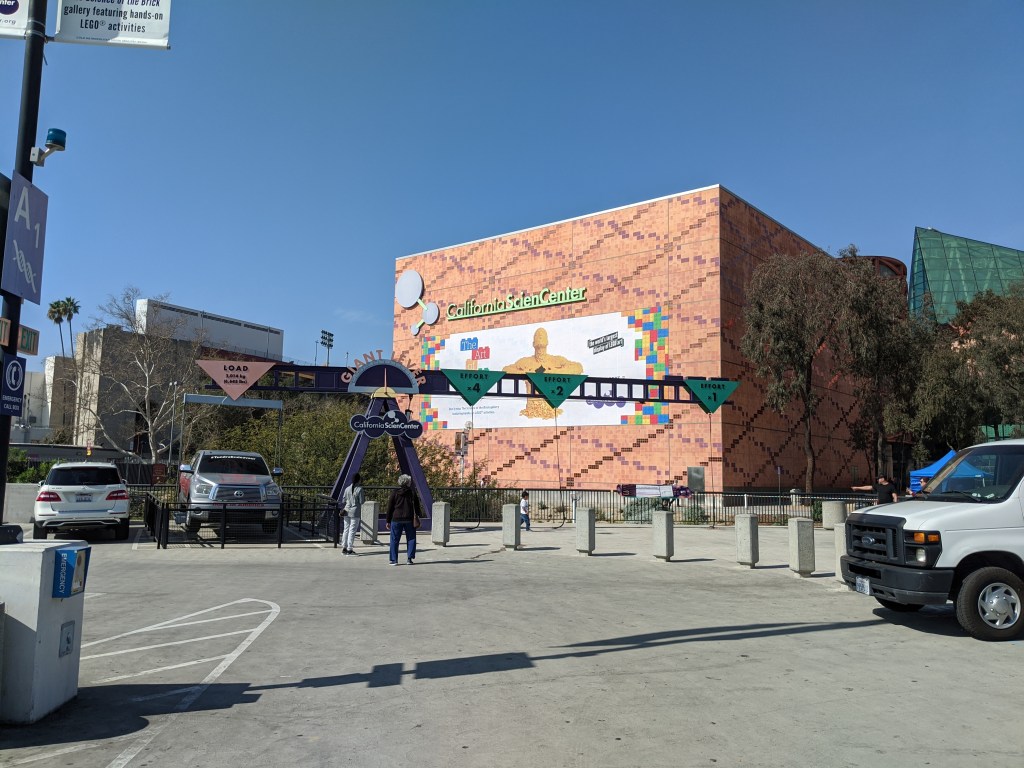
Ladies, if your sweetheart doesn’t bring you to a Science Museum for Valentine’s weekend, then you need to find a man that really understands how women think!
A view of the heat shield from Gemini 11 which was, interestingly enough, launched the day before my birth.
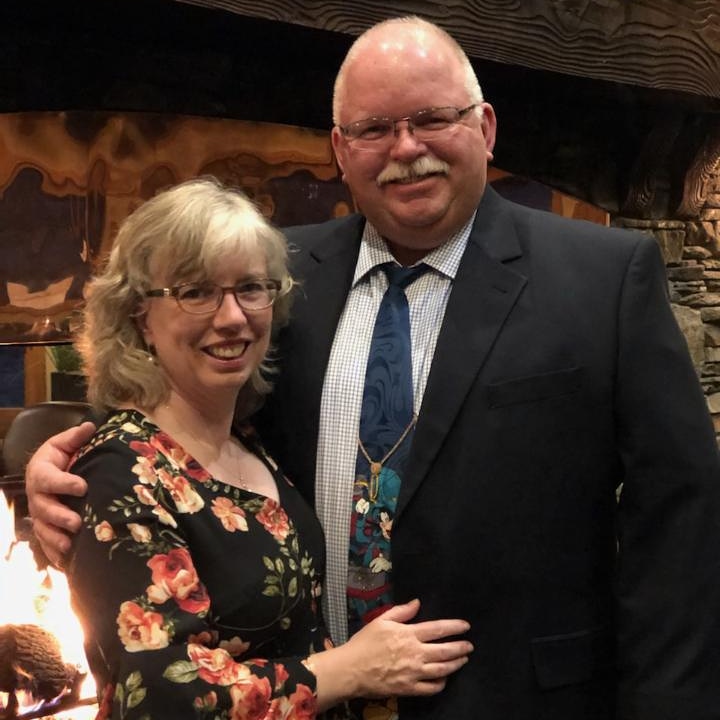
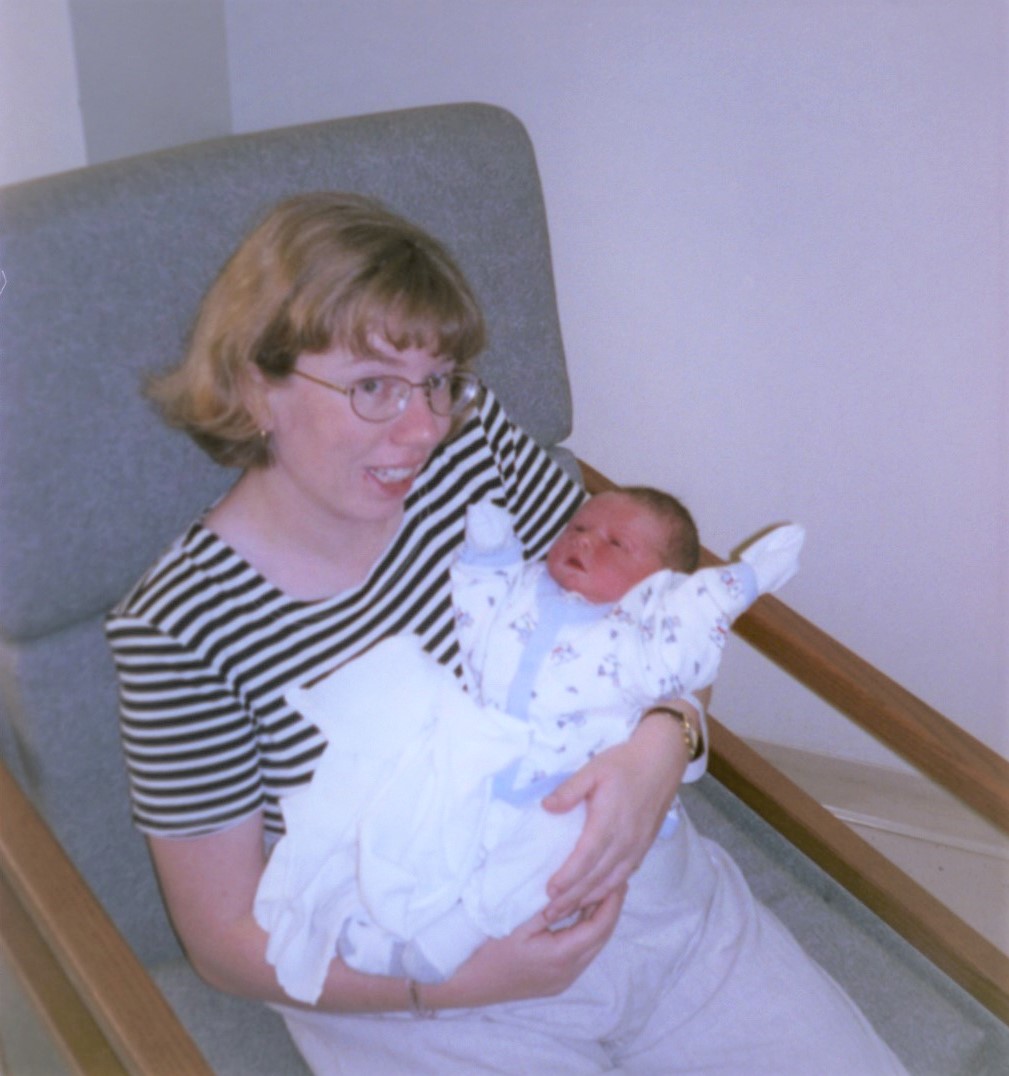
This is a picture of me some 18 years ago, on the day I took my youngest home for the first time. Within a few short weeks, I was back in a doctor’s office talking about lumps, biopsies, and pathologies. Pregnancy had left a little gift for me, and a very unwelcome one it was.
There is something especially terrifying about going through a diagnosis with a newborn in your arms and another child at preschool. The urge to protect our children is strongest when post-partum hormones are coursing through our veins. As a consequence, I felt my children’s welfare was the primary reason my health was important.
Due to the peculiarities of my condition, and the litigative nature of American medicine, my infant had morphed into a rather obnoxious toddler by the time that the wonderful word ‘benign’ was uttered by my doctors. In the midst of those stressful twenty-one months, I engaged in a job hunt. My personal circumstances restricted my job opportunities: I could not give ‘my all’ to any new position. I was already giving too much elsewhere.
Within a few weeks of letting my network know I was looking for a job, I took a position with Global Risk Consultants, my current employer. I was very fortunate to find an employer who understood that I had something of value to offer, limited though it was. I am convinced the primary reason that I am still in the engineering profession is the flexible working arrangements offered to me by GRC.
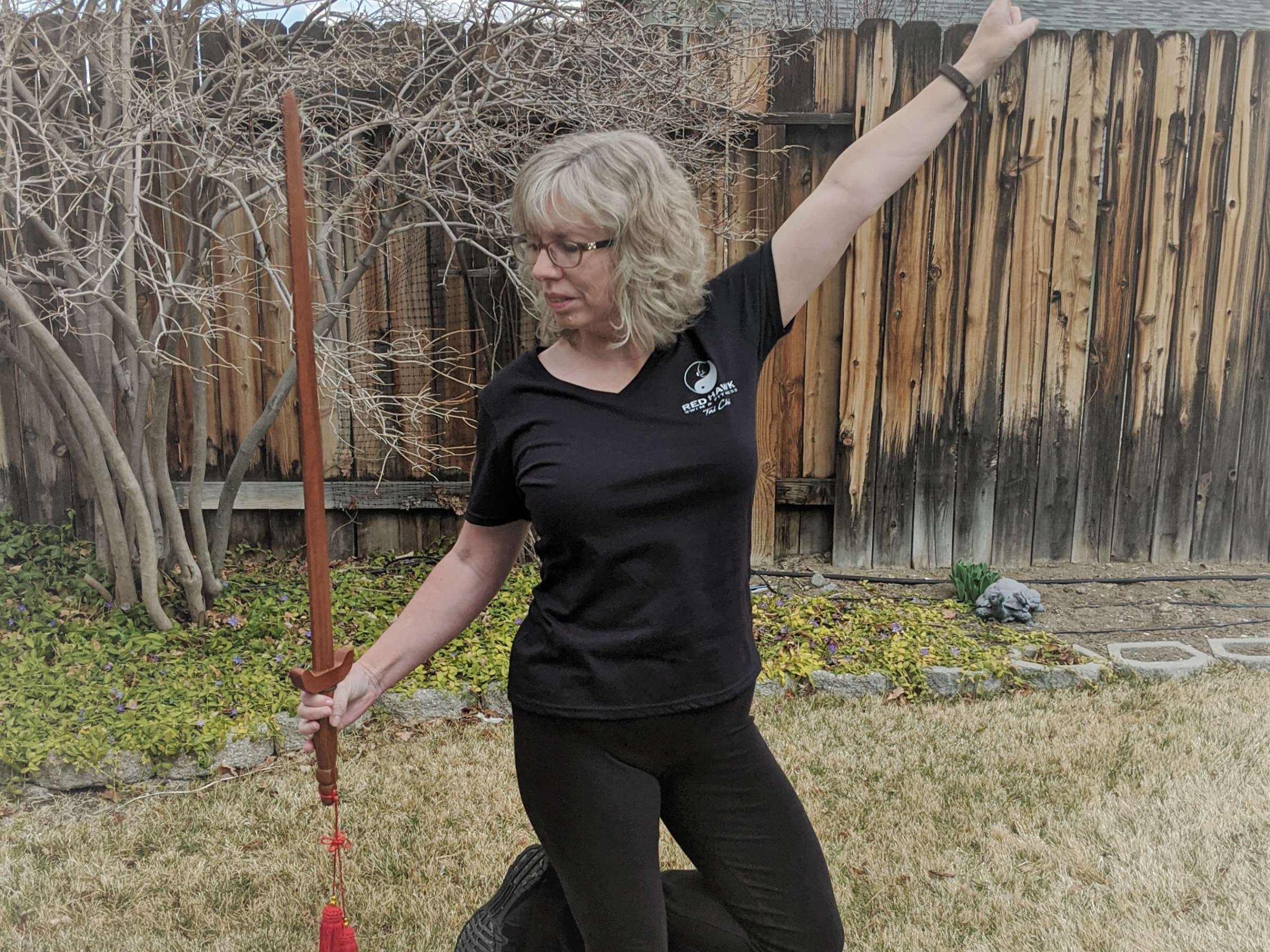
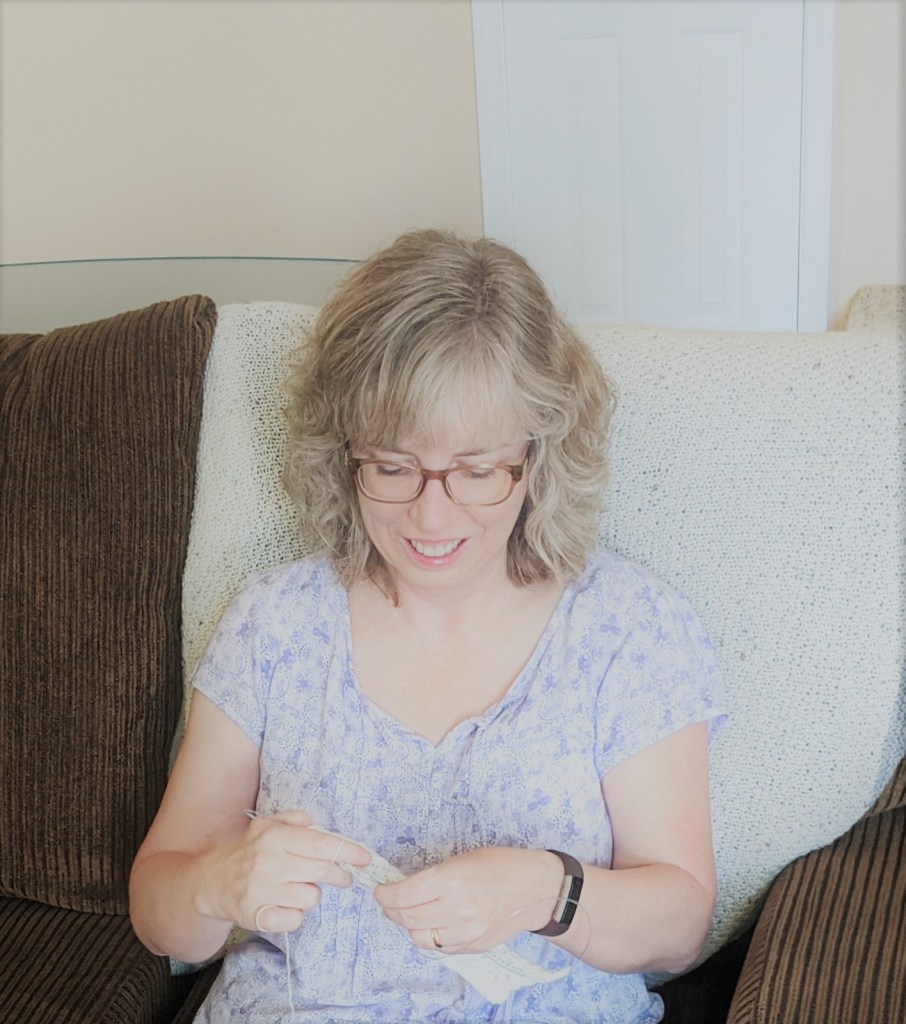
During that period – when I was in doubt of my continuing existence – and since that period, my intent was to simply get on with life. In my professional life, I consulted on thousands of construction projects, obtained my PE license, and worked with some fantastic clients and colleagues. (If you are a LinkedIn contact, you are definitely among that number). In my personal life, I knitted a ridiculous number of hats, learned tai chi, ran a 5k (a surprisingly difficult thing for me), written a couple of books, and, most importantly, watched my children grow into adulthood.
Now with my youngest reaching his majority, my diagnostic journey seems like ancient history. Nonetheless, I remember it as a time fraught with stress and worry. If you are in a similar period of uncertainty, I hope that you do not put your life on hold but continue to live the life you want. I hope you pursue whatever gives your life meaning, whether it be mundane or magical. If what you do pleases you, that’s good enough.








 thenumerateninny.com