thenumerateninny.com
Natterings of a Woman in STEM
Lightfoot is Live
At last! The second novel in the Massoud Chronicles is available on Amazon. Lightfoot by Amanda Norris can be found in all Amazon marketplaces.
Download a copy of the ebook or order a copy of the paperback from Amazon.com and other Amazon platforms. The link for Amazon.com is below.
So, you don’t have an Amazon Kindle device? Don’t worry. You don’t need one to read the electronic version of this Kindle book.
On your smart device (phone or tablet) go to your app store, search for Kindle or Amazon Kindle. Download the app and, once it is ready to go, you can search for, and download, Lightfoot by Amanda Norris.
Follow The Numerate Ninny on Instagram, Facebook, Twitter, LinkedIn or at: http://thenumerateninny.com
Pre-order Lightfoot by Amanda Norris

The second volume in the Massoud Chronicles is now available for pre-order at Amazon.com.
David Lightfoot, the arrogant admiral, takes center stage in this novel. He’s a little ill-tempered, a little self-centered, and a little irritable – but he’s a softy underneath it all.
In this ebook, you will catch up with Elizabeth Massoud, her family, and some of our old friends from Massoud, the first book in the series.
In writing this book, I had fun exploring what happens to a workaholic when he has little work (yikes, can’t be good), the nature of being a clone, and the positives of egotism. I threw in some space-opera style adventure while I was at it, even though the book is, at heart, a romance.
The paperback version of the book will be available for pre-order very soon!
Follow The Numerate Ninny on Instagram, Facebook, Twitter, LinkedIn or at: https://thenumerateninny.com
Almost There!
Doing a final proofing of the paperback version of Lightfoot by Amanda Norris. It should be ready for release soon!

Follow The Numerate Ninny at: https://thenumerateninny.com/
Real Women in Science Fiction

Judy Bullard of Custom E-Book Covers has done a fantastic job redesigning the cover of my first book, Massoud, so that it harmonizes with the cover of the sequel, Lightfoot.
Lightfoot will be available in May, 2019 and Massoud is already available on various Amazon Platforms. Find a free preview below.
There is a tiresome tendency in modern science fiction to depict capable women as superhumans who are impervious to injury and imperfection. It’s almost as annoying as the Victorian image of women as naive and prone to fainting. So my protagonist, Elizabeth Massoud, lives firmly between these two extremes.
To find out more about Custom E-Book Covers, visit: https://www.customebookcovers.com/
Follow The Numerate Ninny on Facebook, Instagram, LinkedIn or at: https://thenumerateninny.com/
Professional Language
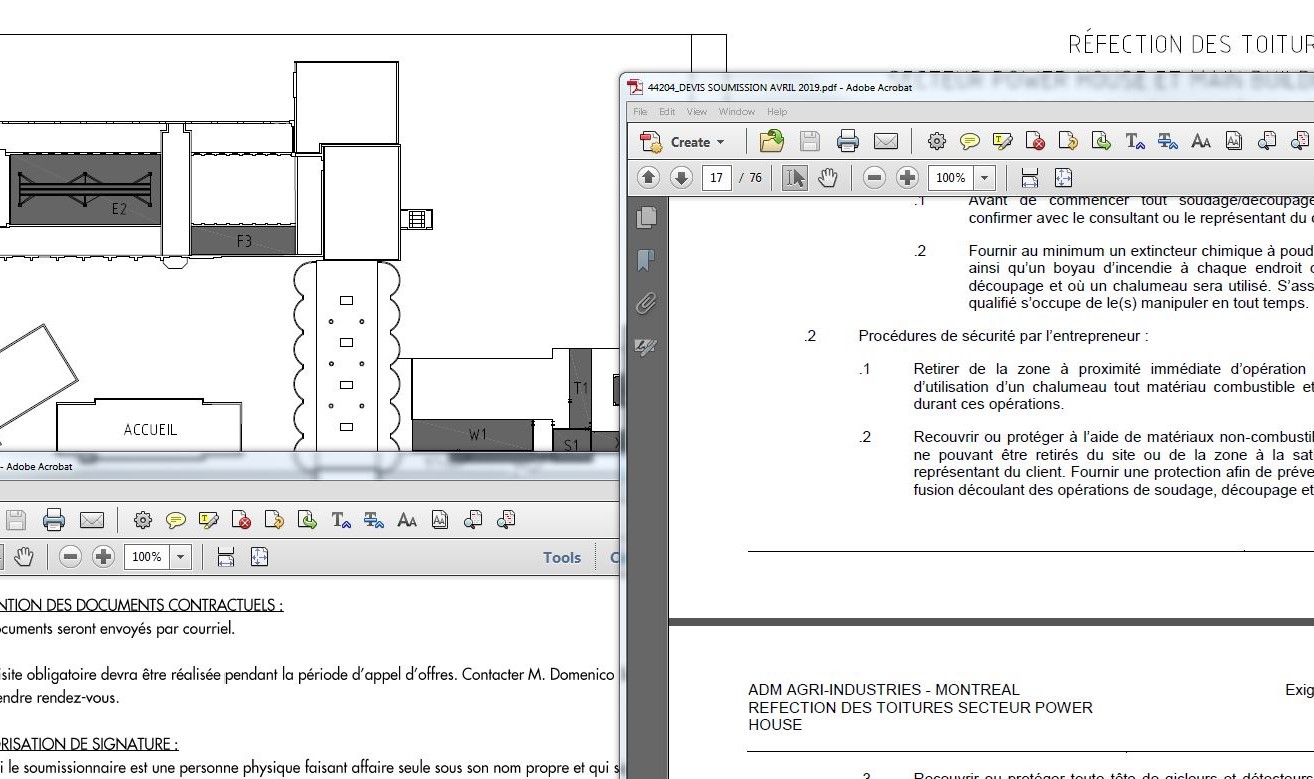
Some 35 years after my last lesson and 5 years after my last attempt to speak the language, I am working on a 76 page specification and its associated drawings en français.
Despite having operated in the monoglot environment of American engineering for almost a quarter century, I still need my rusty language skills. Dependence on on-line translators is too limiting. The human brain needs to get involved:

I occasionally handle documents German and Dutch, but struggle when I need to read Spanish. Apparently, languages learnt before motherhood are retained better than those you first encounter after the arrival of offspring. How rather unshocking!
Despite assertions to the contrary, technical people need language education (preferably before parenthood). In truth, I don’t believe there is any career where such education is wasted.
Because I am well past the point of composing a sensible sentence in any other language, I am grateful my clients accept my input in English. I love the fact that they have learnt a second language and that language was English. Now if only we could understand each other’s accent on the ‘phone…
Follow The Numerate Ninny on Facebook, Twitter, Instagram, LinkedIn or at: http://thenumerateninny.com
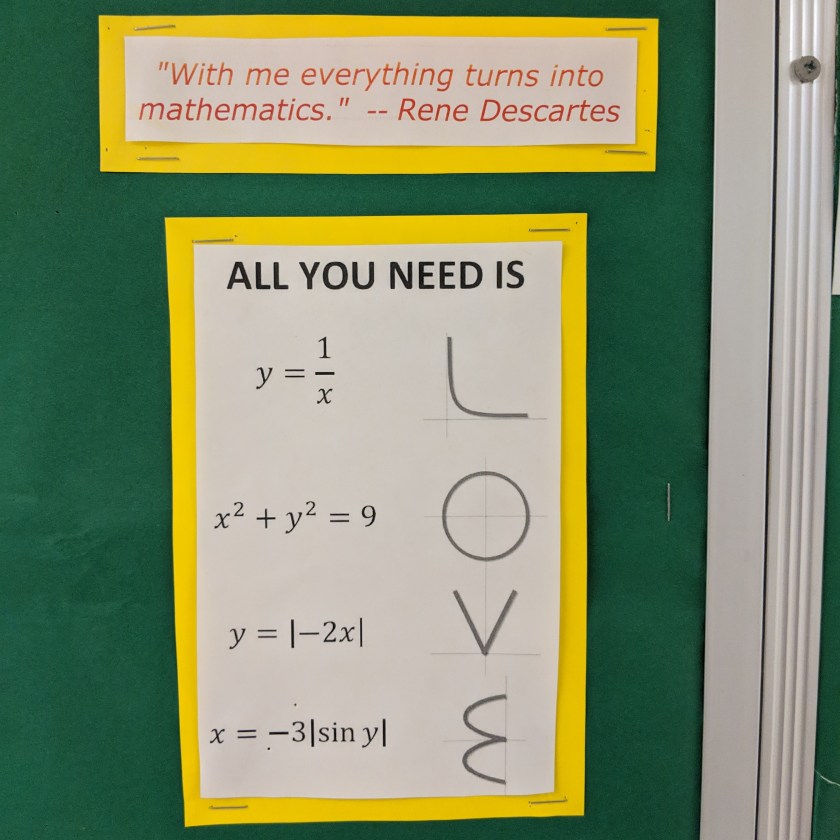
Mathematical Love
If you change the equations or their limits, love can be unequivocally positive. If only life was as simple as mathematics!
Follow The Numerate Ninny on Facebook, Instagram, LinkedIn or at: https://thenumerateninny.com
If Cinderella was a firefighter…
American volunteer fire departments’ wealth (i.e. their patron’s wealth) was once demonstrated by their possession of hose and hose carts. In the early 1800’s fire hose was produced from riveted leather with brass fittings and was notably expensive. Ownership of such a product denoted status.
However, by the 1870’s, cheaper and less prestigious cotton and canvas hose became the norm, and preeminence could only be proved through the magnificence of the hose carriage.
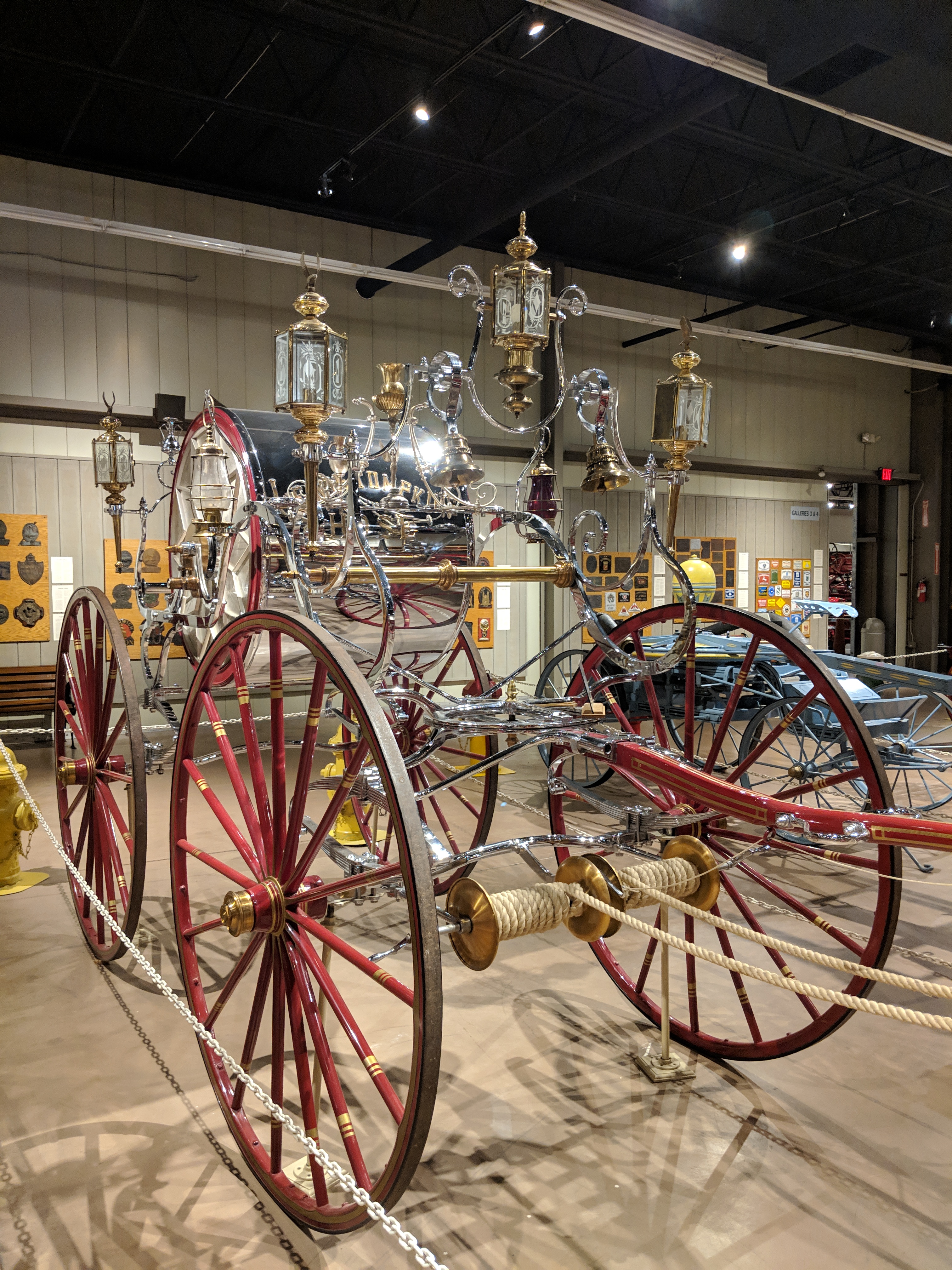
Any fairy godmother would be proud to conjure up this 1889 Gleason and Bailey Hose Carriage. The ceremonial carriage was the property of Fishkill on Hudson, New York Volunteer Fire Hose Company and was displayed at fairs, musters, and parades. The fire company’s patron, Lewis Tompkins – a woolen hat industrialist of all things – paid for the elaborate cart.
Had I been privy to the decision to commission this delightful stainless steel beauty, I would have played the evil stepmother and have demanded funds be used in a more sensible fashion. However, there were no pragmatic females in the fire field at that time, and the princes of industry wanted their shiny toys. Nevertheless – 130 years later – I have to admit the carriage is a beautiful piece of history.
Let’s leave Cinderella to don her turnouts, and the mice to draw her hose carriage. No doubt she’ll have a blazing time at the ball.
Another beauty – an 1870 Buckley & Merritt Hand Drawn Parade Carriage:


These lovely artifacts are not the only carefully preserved fire apparatus that can be seen at the Hall of Flame Fire Museum in Phoenix, AZ. Exhibits span three continents and four centuries.
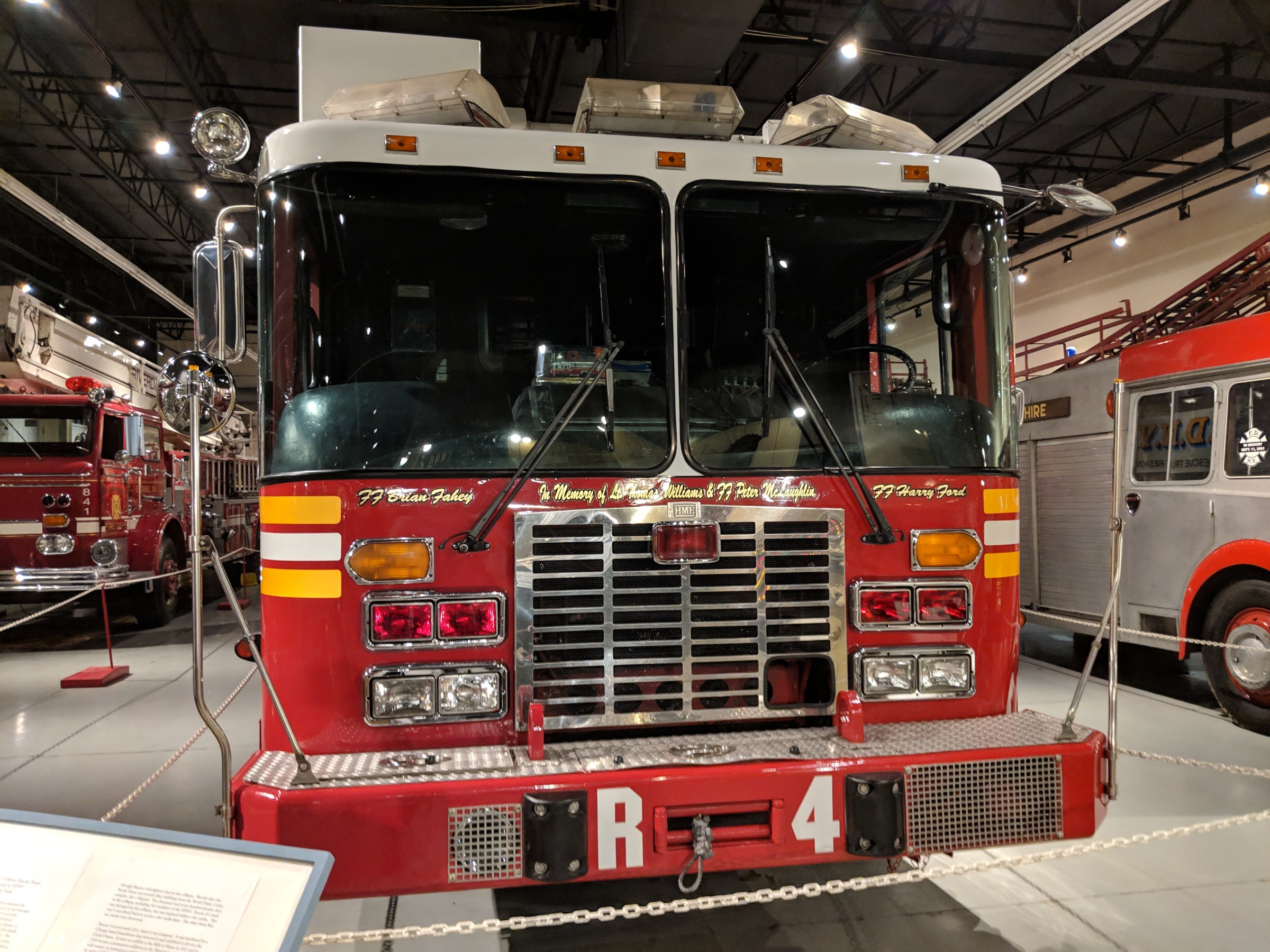
Displays include the prosaic, but historically significant, Rescue Truck 4 which was damaged during 9/11, but returned to service after repair. It was retired in 2010. All eight members of Rescue 4 Company were lost on 9/11.
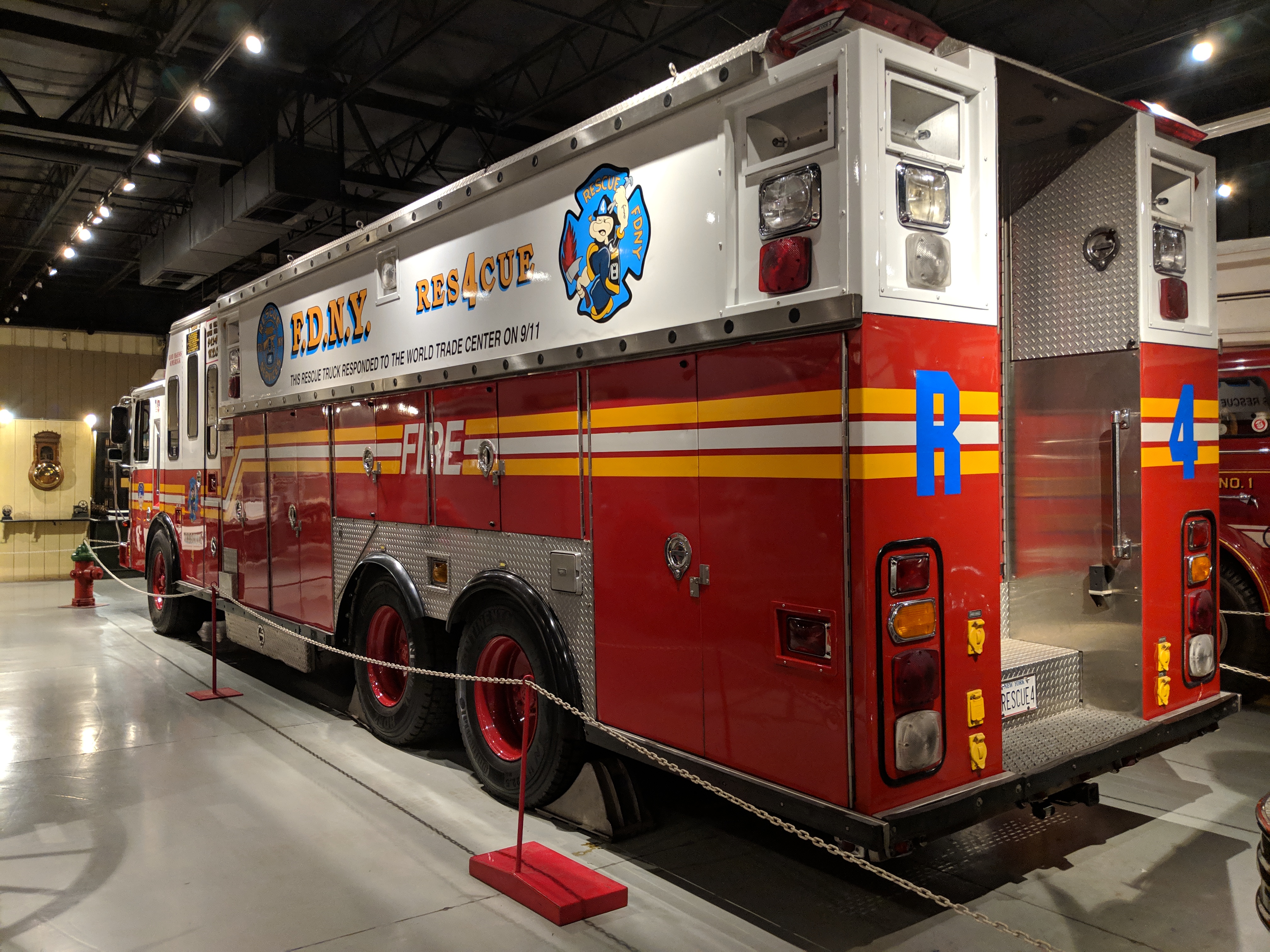
Find out more about the museum at: http://www.hallofflame.org
Follow The Numerate Ninny on FaceBook, Instagram or LinkedIn or at: https://thenumerateninny.com
The Height of Irish Technology

An opinion was once expressed to me, in a rather disparaging tone, that the three-legged stool and the Titanic were Ireland’s greatest contributions to technology. Initially defensive, I soon realized that there was nothing to defend.
The three-legged stool is an intellectually elegant invention.
Consider the fundamentals:
Design Requirement – A seat that can be deployed on an uneven surface, remain stable, and not be subject to movement.
Design Principle 1 – Short legs to ensure the center of gravity of the supported person does not extend beyond the limits of the seat – at least for angles that may be commonly encountered on a rough floor.
Design Principle 2 – A seat that is a limited plane, parallel to the plane defined by the bottoms of the three legs. The bottoms of the legs represent three non-collinear points which can be orientated to find three matching points on the uneven floor.
By using the minimum number of points needed to define a plane, the stool’s design maximizes the probability of matching the seat’s plane to one defined by three points on the uneven floor. (And you thought the design was unsophisticated.)
The three-legged stool is an ancient design, developed by people who were stymied by lack of education and poverty. Clearly such circumstances do not preclude an innate understanding of mathematical principles. Traditional design often reflects an organic understanding of geometric and scientific principles – an understanding which was derived, I presume, from direct observation of the natural world.
This thought might give you pause and make you question the ability of our next generation to understand and interpret what lays beyond the screen of their smart phones. I feel confident in their abilities, however. They are an inquisitive bunch.
As for the Titanic, the naval architect did a fine job. The fault lay with a certain Englishman who believed the nonsensical claims of unsinkability and piloted the ship into an iceberg.
Follow The Numerate Ninny on FaceBook, Instagram or LinkedIn or at: https://thenumerateninny.com
The Real McCoy
If you are a mechanical engineer, Black History Month will naturally lead you to think about rail axles.
If you are not a mechanical engineer, this may need some explanation.
In the early decades of rail, lubrication of axle bearings was a tedious and repetitive task. An oilman would take his oilcan and carefully apply lubricating oil to the train’s bearings. This needed to be done every few hours, and required rail stock to be brought to standstill.
The most famous oilman of all time was the Canadian, Elijah McCoy (1844-1929).
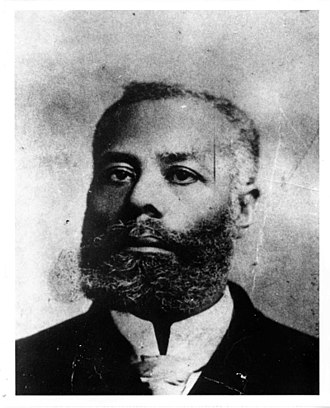
Mr. McCoy was a beneficiary of what was then the best professional engineering training in the world. He had taken advantage of the great Scottish experiment in near-universal, quality education. The Scottish educational system was one of the first to promote formal teaching of the skills needed in professions such as medicine and engineering. To be a Scottish-trained professional in the nineteenth century was to command respect.
However, despite Elijah McCoy’s dual qualifications as a master mechanic and mechanical engineer, when he moved to the land of his parents’ birth (the USA), he was barred from professional work because of his African ancestry. He took the lowly but worthy jobs of oilman and fireman in the then expanding rail industry.
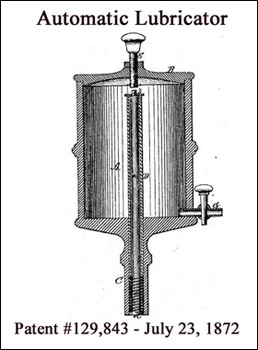
Genius will not be quashed by lack of opportunity, and Elijah McCoy’s humble work as an oilman inspired higher pursuits: He developed a means to consistently and semi-automatically lubricate mechanical equipment. His invention, the lubricating cup, increased bearing life and equipment uptime.
He continued to invent throughout his long life and went on to obtain 57 patents for various devices, many of which related to tribology (lubrication). Unfortunately, due to difficulty in raising capital, others gained much of the benefit from his inventiveness.
For many of us, the term the Real McCoy relates to this gentleman’s reputation for quality work and products.
(There are those that believe the origins of the expression lie in a literary work, but that would be unworthy of consideration for those of us with a technical bent.)
My own experiences with the lubricating cup date back to my first job after graduation in the late 1980’s. The chemical plant I worked at was pre-war (that’s pre-Second World War to my younger friends) and at least one pump alley had a row of pumps whose bearings were equipped with what we referred to as lubricating bottles.
Although I may be part of the last generation of engineers to have seen these devices in widespread use, lubricating cups continue to find use in specialized applications – an enduring testament to Mr. McCoy’s creativity.
Follow The Numerate Ninny on Facebook, Instagram, LinkedIn or at: https://thenumerateninny.com
Encoded Crafting

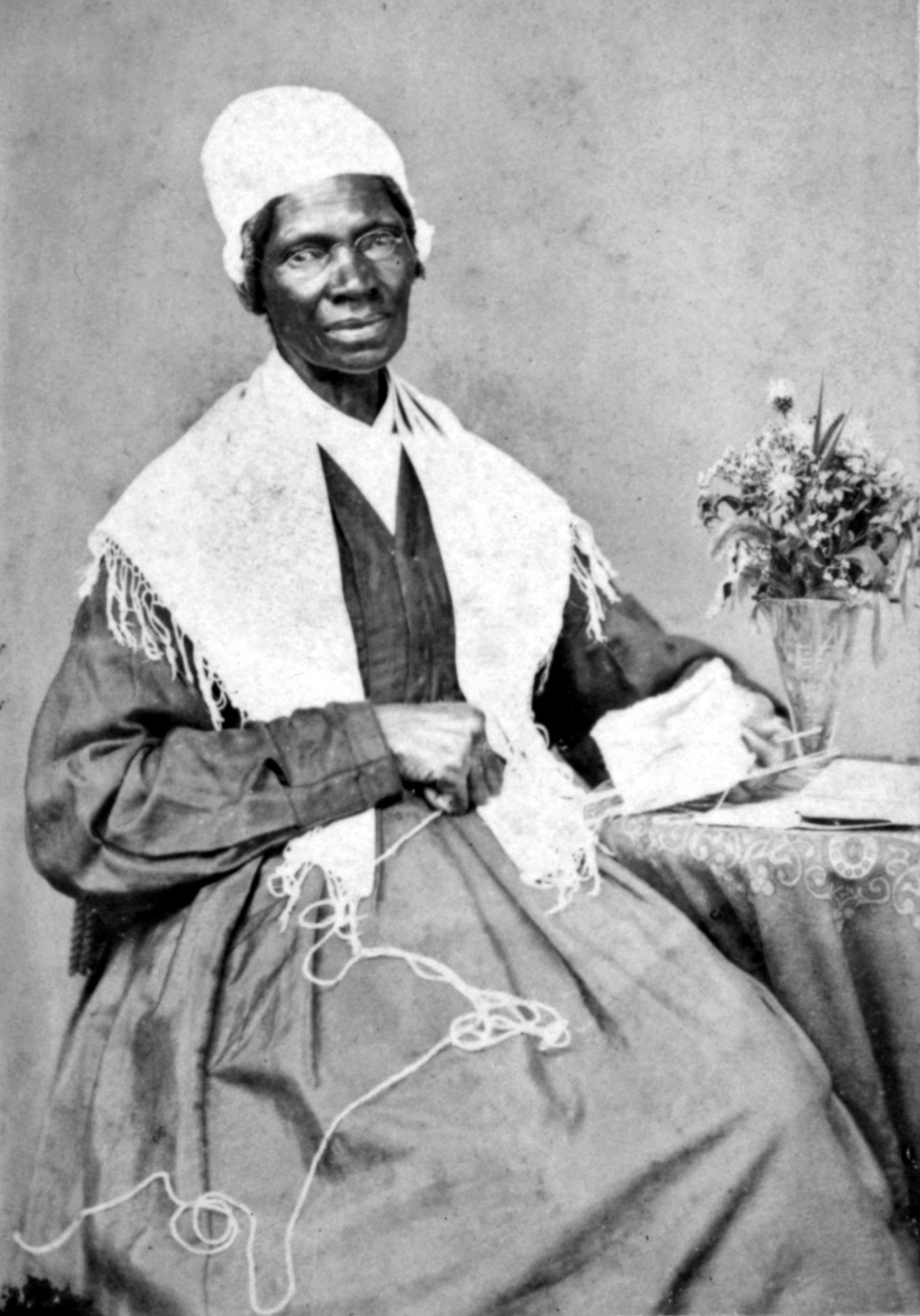
While I was knitting one day, my eldest son was prattling on about his coding class. I happened to glance down at my pattern and realized – with unjustified surprise – that I was looking at lines of code.
An acquaintance of mine describes knitting as a form of moving meditation, akin to Tai Chi. I don’t disagree with her, but my mindset does not naturally turn to such poetic interpretations. I agree that in every knitting project, a moment is reached when the undulations and natural flow of the work carry the pattern forward. However, before reaching that stage , and in establishing the pattern, the process is more literal and prosaic. The sequence, the number, and the type of stitches must be called out very exactly by the pattern you are following.

Each written knitting pattern consists of instructions recorded line-by-line and stitch-by-stitch. The details are presented in code: K for knit and P for purl are the most common elements, but more specialized code is defined in the legend of each pattern. The knitter must acquaint herself with the publisher’s language and understand the physical action the instructions represent. Even the youngest of knitters is expected to understand the code and manipulate it to meet their ends.
As inferred above, the basic elements of the knitter’s skills are binary actions – Knit and Purl – indicating whether the loop of yarn is brought to either the front or the back of the work. Even more sophisticated techniques, such as cabling, casting off, picking up stitches, and working through back of loop, are merely variations on the binary options. Embedded in all but the simplest of patterns are subroutines – instructions for a sequence of actions to be repeated in particular locations or until a specific criterion is met. The end result of the knitter’s labor is softwear (unless particularly itchy wool is used).
The knitting pattern is quite clearly a coded set of instructions that predates the development of the computer, and one which was generally mastered only by women. The same intellectual abilities that are needed to knit are needed to code. Women have demonstrated ability in the first for centuries, so why are so few of them engaged in the second in 2019?
Follow The Numerate Ninny on FaceBook, LinkedIn or at: https://thenumerateninny.com/
 thenumerateninny.com