thenumerateninny.com
Natterings of a Woman in STEM
If Cinderella was a firefighter…
American volunteer fire departments’ wealth (i.e. their patron’s wealth) was once demonstrated by their possession of hose and hose carts. In the early 1800’s fire hose was produced from riveted leather with brass fittings and was notably expensive. Ownership of such a product denoted status.
However, by the 1870’s, cheaper and less prestigious cotton and canvas hose became the norm, and preeminence could only be proved through the magnificence of the hose carriage.
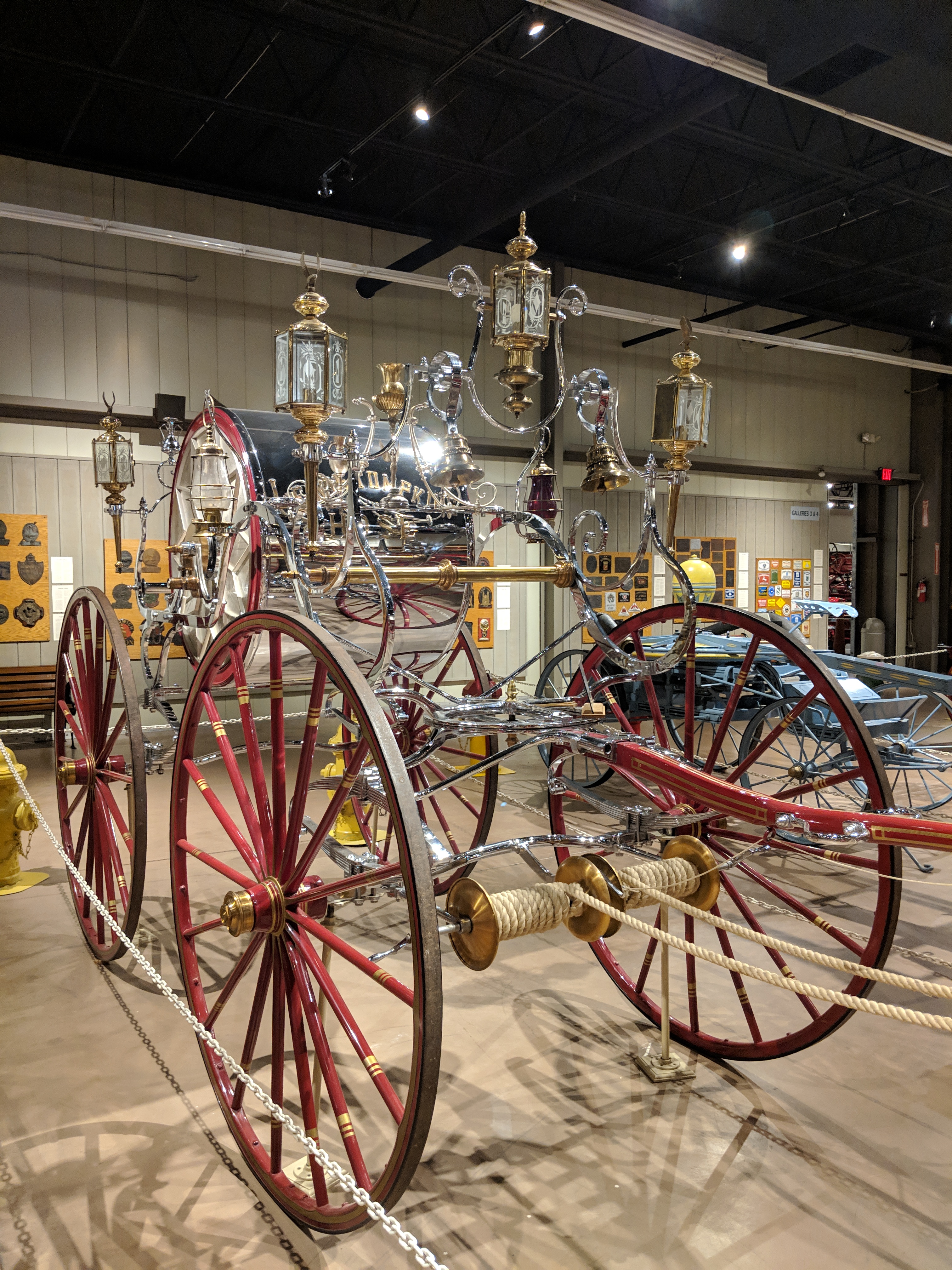
Any fairy godmother would be proud to conjure up this 1889 Gleason and Bailey Hose Carriage. The ceremonial carriage was the property of Fishkill on Hudson, New York Volunteer Fire Hose Company and was displayed at fairs, musters, and parades. The fire company’s patron, Lewis Tompkins – a woolen hat industrialist of all things – paid for the elaborate cart.
Had I been privy to the decision to commission this delightful stainless steel beauty, I would have played the evil stepmother and have demanded funds be used in a more sensible fashion. However, there were no pragmatic females in the fire field at that time, and the princes of industry wanted their shiny toys. Nevertheless – 130 years later – I have to admit the carriage is a beautiful piece of history.
Let’s leave Cinderella to don her turnouts, and the mice to draw her hose carriage. No doubt she’ll have a blazing time at the ball.
Another beauty – an 1870 Buckley & Merritt Hand Drawn Parade Carriage:


These lovely artifacts are not the only carefully preserved fire apparatus that can be seen at the Hall of Flame Fire Museum in Phoenix, AZ. Exhibits span three continents and four centuries.
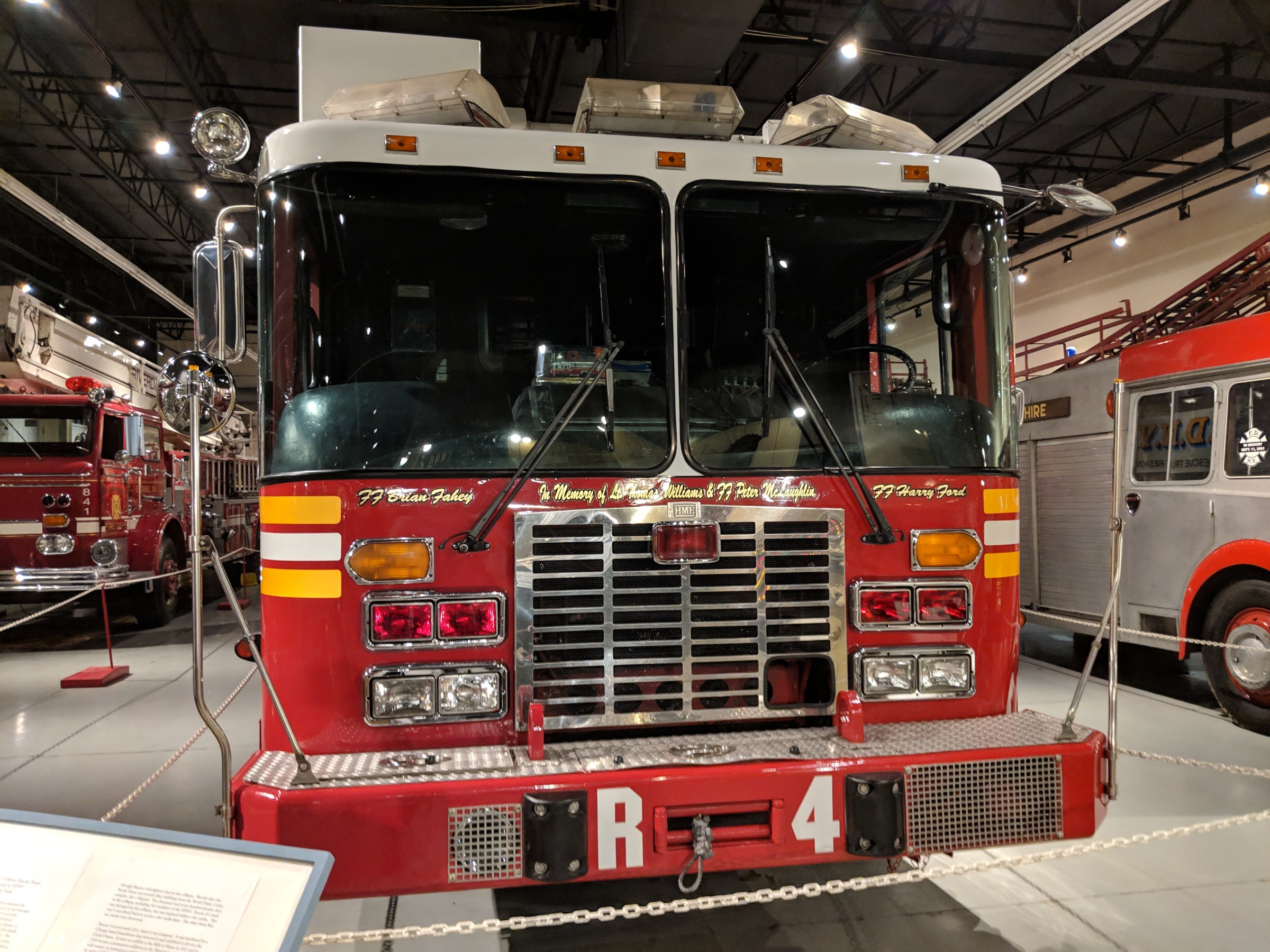
Displays include the prosaic, but historically significant, Rescue Truck 4 which was damaged during 9/11, but returned to service after repair. It was retired in 2010. All eight members of Rescue 4 Company were lost on 9/11.
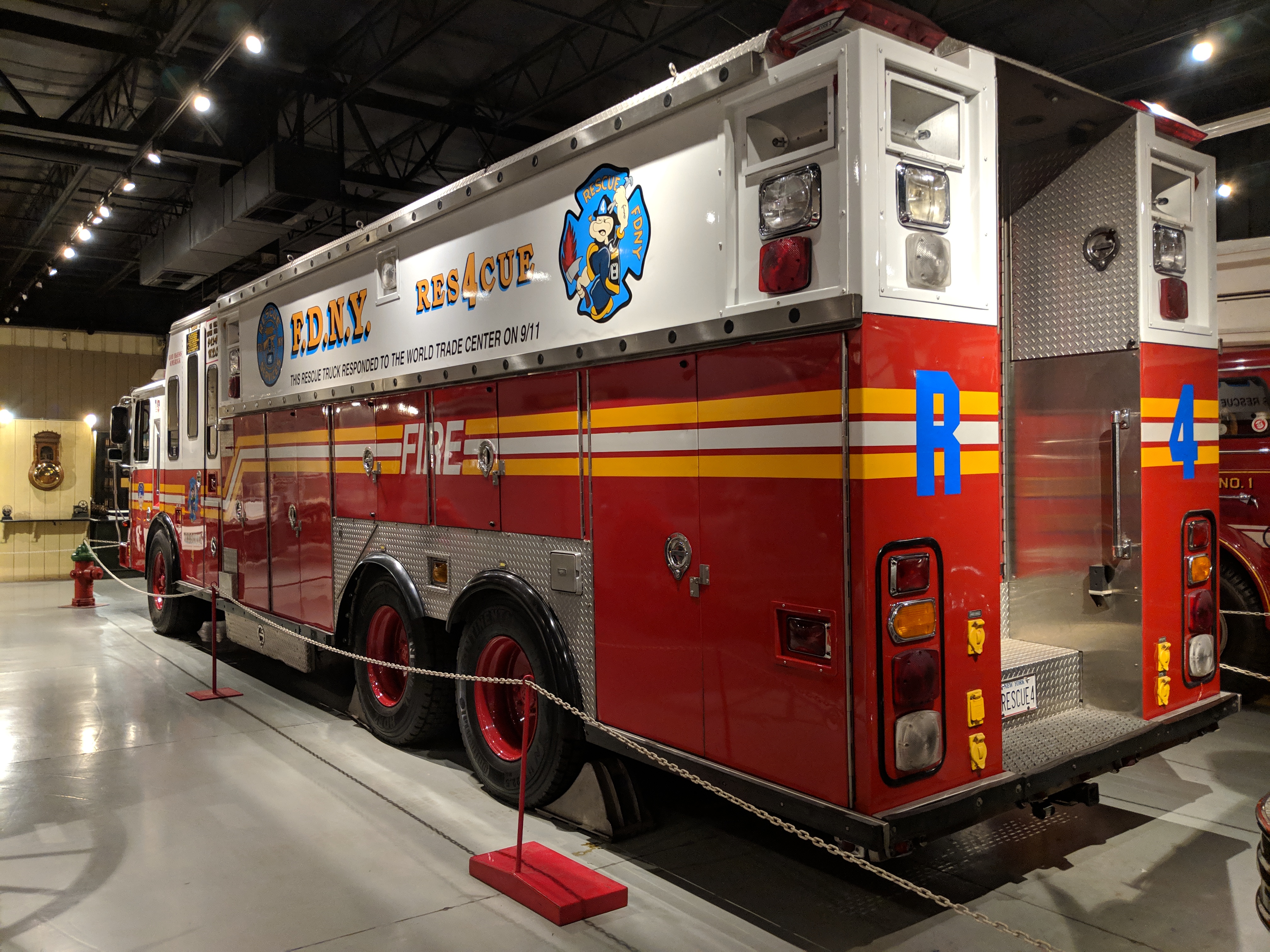
Find out more about the museum at: http://www.hallofflame.org
Follow The Numerate Ninny on FaceBook, Instagram or LinkedIn or at: https://thenumerateninny.com
 thenumerateninny.com
Always fascinating and such truly beautiful structures. Love the name of the museum too!
LikeLike